As I was thinking about what photos to present in this challenge, I realized that for my Wordless Wednesday posts there are usually three photos focusing on one theme to tell a story wordlessly. All of my snaps this week are from the archives. Hope you enjoy!
North Head Lighthouse
Cape Disappointment has two lighthouses. From the beach where I walk with my beagles, the North Head lighthouse is a prominent feature. It overlooks what has been called “the graveyard of the Pacific” by seafarers, for the dangers presented by the Columbia River entering the Pacific Ocean. When the lighthouse was reopened for visitors, Creighton and I jumped at the chance to see it from the inside
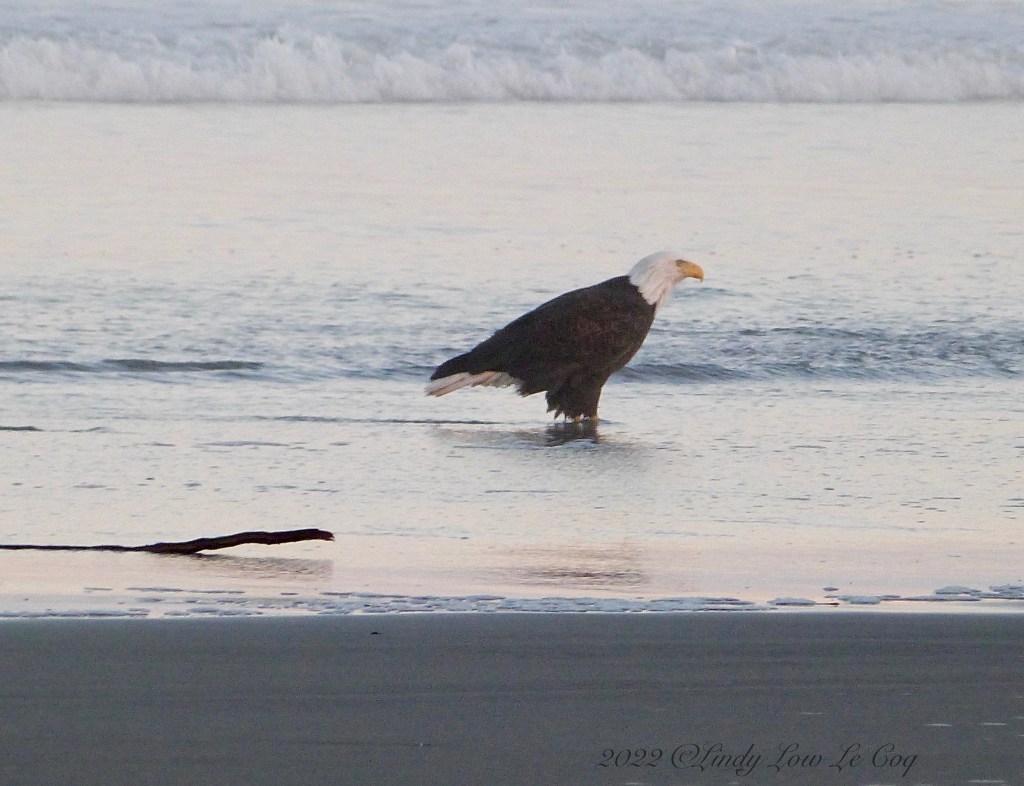
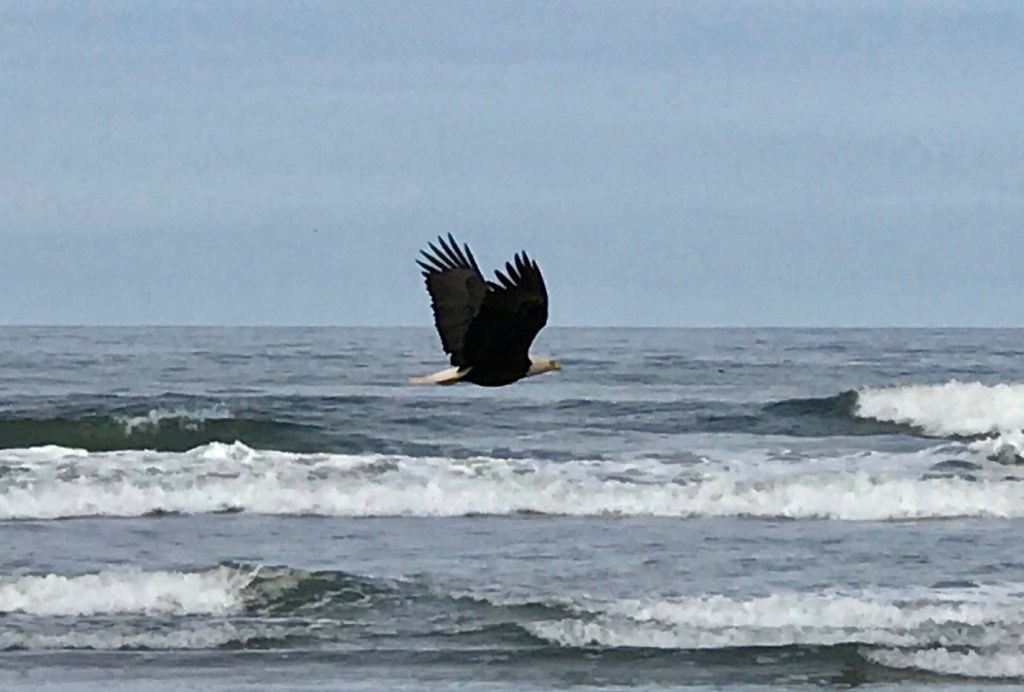
Bald Eagles – Haliaeetus leucocephalus
This breeding pair of Bald Eagles was not happy to have an almost mature Bald Eagle intrude upon their territory. Notice their expressions and body language!
Western Gull – Larus occidentalis
The ubiquitous gulls fascinate me for their various feathering and behavior patterns. As with eagles, gull maturity can be determined by the color of their bills, in addition to their body and wing feather colors.
Jack-In-The-Pulpit ~ Arisaema triphyllum
Three stems of Jack-In-The-Pulpit emerged in late spring – to my delight! For as long as I have known about them, I wanted this fascinating looking plant. A perennial, it continues to please me every spring and summer.
Wherever you find Three of a Kind, please honor our earth, be charitable and stay safe.🐾
Thank you Ann Christine, for a theme with so many possibilities!
Many little things have added up to cause me to be late with this post. Still, I am happy to share a few of the little things that brought a smile to my face and prompted me to take a shot.
Above, a mother tree with a young seedling nestled in its ancient roots. Below, though pixelated, the best photo I have of a fledgling Killdeer.
The contrast in size between the little tricycle in the back of a pickup truck started my day with a smile. I’ve been saving this photo for just the right challenge!
A daisy peeking through conifer branches, a damselfly by the creek, and a tiny frilled mushroom in dune grass are just a few of the small things in nature that bring delight to my life.
Max and Daisy were always happy when we crossed paths with these two women on our walks around the Breakers. Treats were in her pocket and she enjoyed sharing!
Wherever you enjoy every little thing, please honor our earth, be kind and stay safe.🐾
Thank you Amy for giving us a reason to smile in the midst of the anguish in our times.
Cranberries have been farmed on and around the Long Beach Peninsula since the late 1800’s. At first growers would pick the cranberries by hand, which is okay for a family and community harvest, however unsustainable for future a commercial ventures.
The Furford dry harvest picker was first introduced by Julius Furford of Grayland, WA in 1956. Power is supplied by a 4-6 h.p. gas engine.
“During WWII growers welcomed the increased demand for cranberries to help feed the troops, but the shortage of labor for hand-picking prompted them to look for more efficient, mechanized harvesting methods to improve production. One of the most unique pieces of equipment developed to do the job was the vacuum or ‘suction” picking machine.” Cranberry Museum
Today most cranberries are harvested using a technique known as wet harvesting. The bog is flooded with water and the cranberries float to the surface, where they are easily scooped up.
The Cranberry Museum is located on the Washington State University Agricultural Extension scientific research ground on Pioneer Road. Hope you visit and buy some of their delicious cranberry condiments!
Thanks to John for getting me to focus on one small and important part of the history of this stretch of sand along the western edge of the USA continent!
Wherever you walk, please honor our earth, be kind and stay safe.🐾
This week, Patti invites us to explore the interplay of light and shadow – a favorite subject of mine! In this post are some old favorites plus a couple new ones that I love.
Frosty Dunes
The rising sun highlights golden dune grass above while in the shadows, wind-carved sand remains frosty cold.
Leadbetter Point State Park is a nature reserve at the very northern tip of the Long Beach Peninsula. Summer nesting grounds for Snowy Plovers, those parts of the park are closed to the public during nesting season. The rest of the year (and of the park) is wide open and a wonderful place to wander with a camera! I took this shot because I loved how the shadows of the trees intersected with the trail, moving our eye into the scene.
Mantis
The shadow of the above Praying Mantis is more interesting to me than the critter itself – looks like it’s about ready to knock out an opponent boxer!
Red-necked Phalarope – Phalaropus lobatus
Yesterday, a flock of Red-necked Phalarope stopped to feed in our ponds at The Breakers. A rare sighting, I dropped the beagles back home and picked up my Panasonic to get some telephoto shots. Though this one is a bit out of focus, it’s the lovely wave action and grass shadows that convinced me it would fit in this post. (More Phalarope photos to come on Wordless Wednesday!)
Miss Daisy
I’ll close with this sweet shot of Daisy at the top of the stairs in our Vancouver home. Sun shining through a second floor window provided her a nice warm spot to rest.
Wishing everyone shady places on sunny days. Whatever the weather, please honor our earth, be kind and stay safe.🐾
Thanks to Patti for another challenge reminding me of the joy of photography!
Although I have known about the rule of thirds most of my adult life, I admit that when I take a photograph I’m usually “in the moment” and do not stop to determine if I have the image as I would want it if I wasn’t able to change it afterwards.
The pair of Purple Finch (Carpodacus purpureus) above is an example. With birds, there is no telling when they are going to fly off, so getting a focused shot is more important than framing! In cropping the original, I centered the left vertical line through the male finch’s eye. He fills the upper left quadrant, while the female balances him in the lower right quadrant.
As she introduced this challenge, Tina introduced me to a new perspective. “Another approach to composing is a “Z” configuration – structuring your image so that the viewer’s eye is moving from left to right.” The above silhouette of a Bald Eagle (Haliaeetus leucocephalus) perched on a snag with the ocean breakers rolling towards the beach fits that form to a Z!
Part of the drama in the above photo is this young Mule Deer’s glance across the trail to where its mother had dashed when she saw me. To frame it, I centered the right vertical line on the young deer’s left eye, and the lower horizontal line on its under-belly. This firmly grounds the deer while also providing plenty of context about where we are.
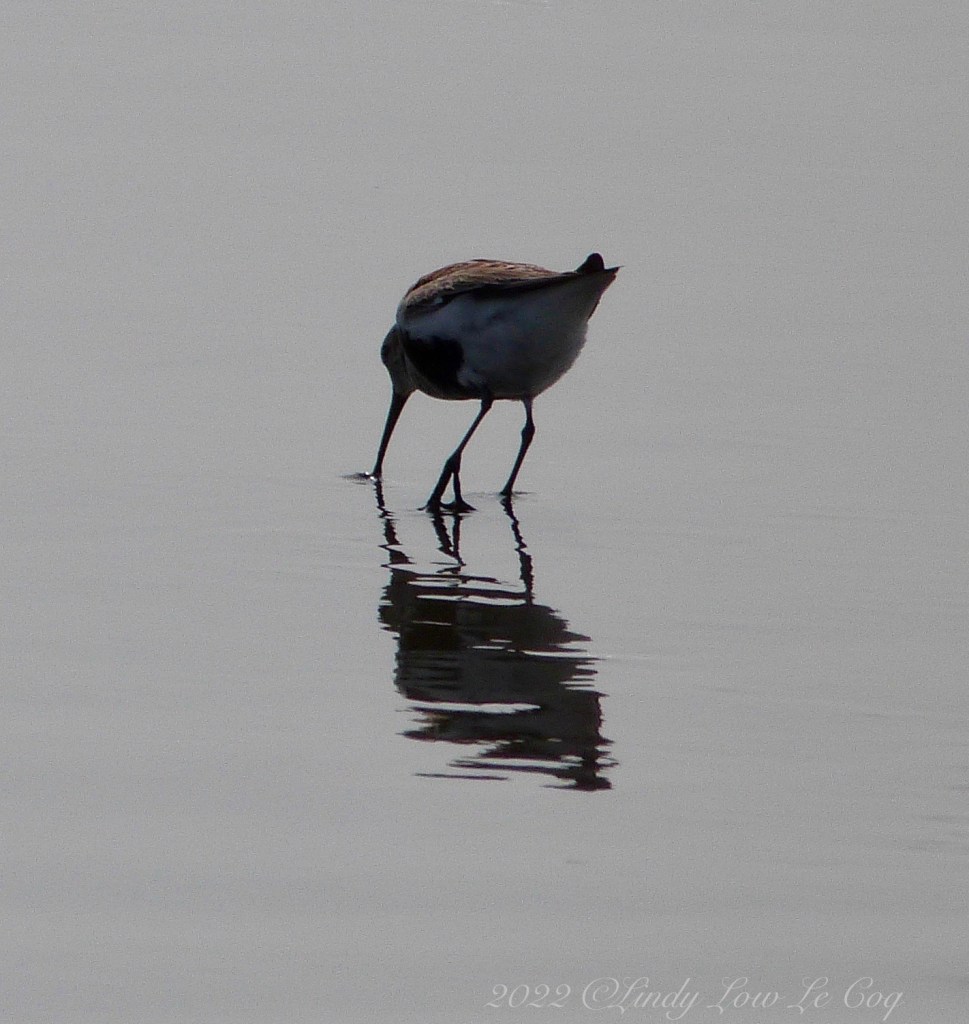
When I snapped the photo above, my main goal was to get a clear enough shot that I’d be able to identify the species; Wilson’s Snipe (Gallinago delicata), foraging along the shoreline near the close of day. Framing this find was simple. Center front – bird and shadow – light and movement.
And sometimes the subject takes center stage – all alone – right where it belongs!
In whatever quadrant, vertical or horizontal line you find yourself, please honor our earth, be kind and stay safe.🐾
Walking With Eagles is a collection of original poems and photographs by Lindy Low Le Coq. A lifelong naturalist, amateur photographer and bird enthusiast, Lindy’s verse, composition and photographs open a window into the essence of her subjects. Her poems and photography reflect the rich natural wonders of the Pacific Northwest.
Bald Eagles mature over the course of five years. Walking With Eagles invites the reader to take a poetic and visual tour of this odyssey.
view ~ Walking With Eagles ~ in top menu bar for a preview, though the folio is much nicer!