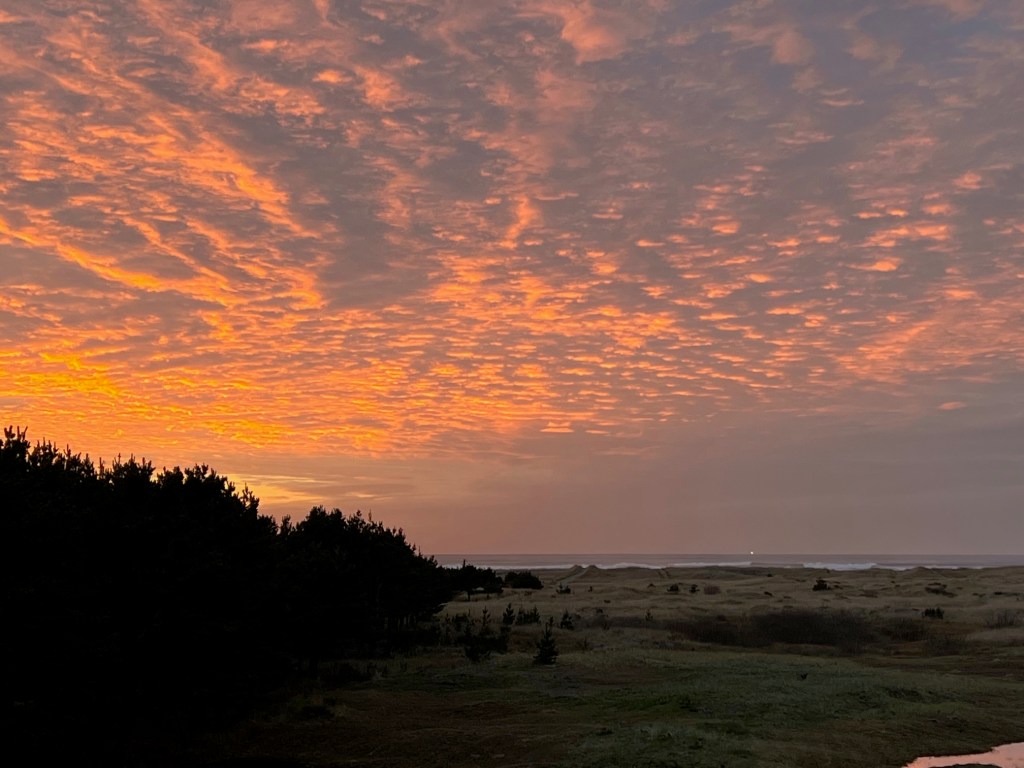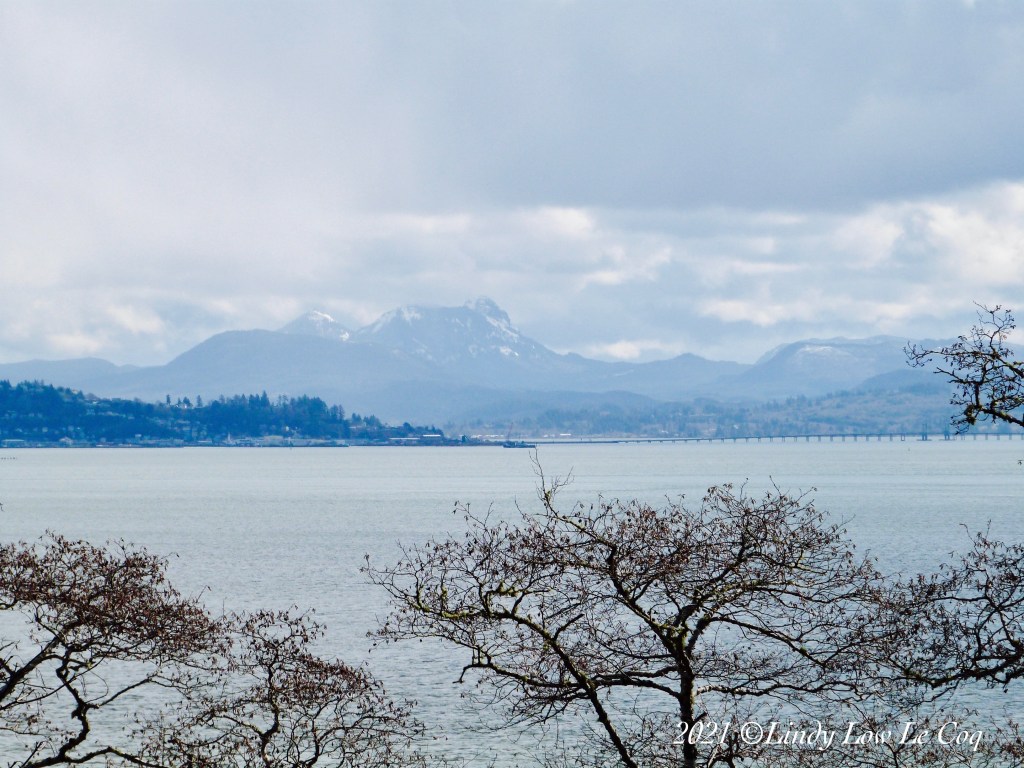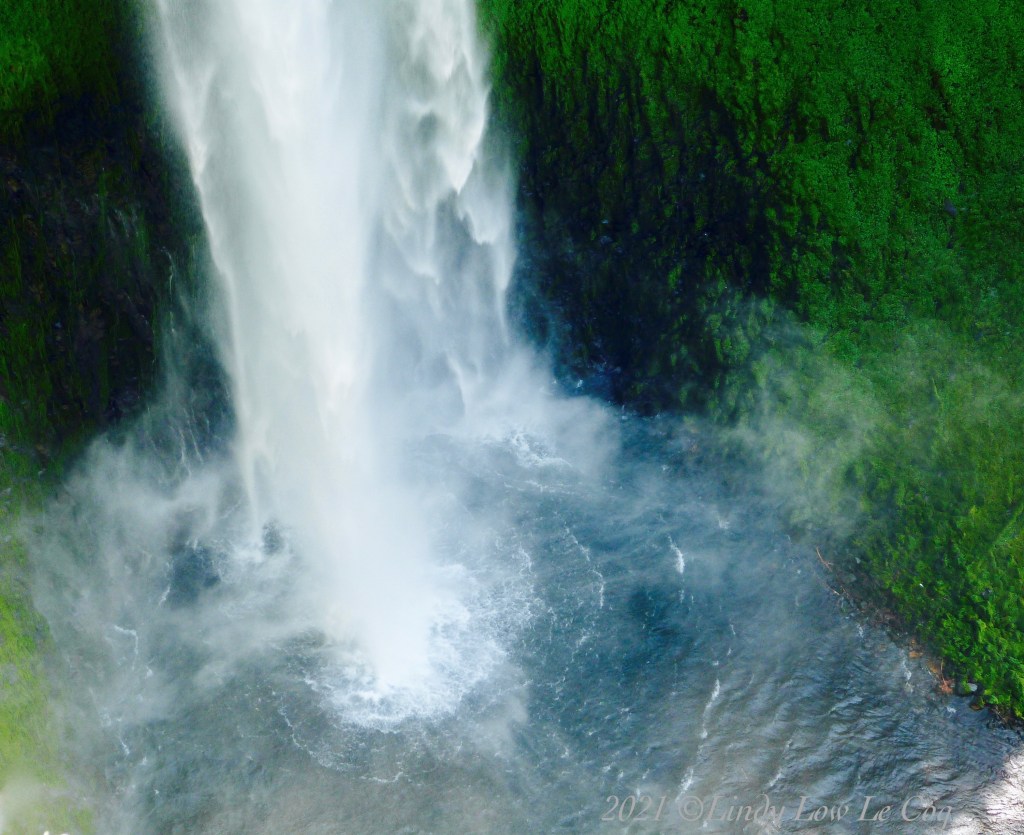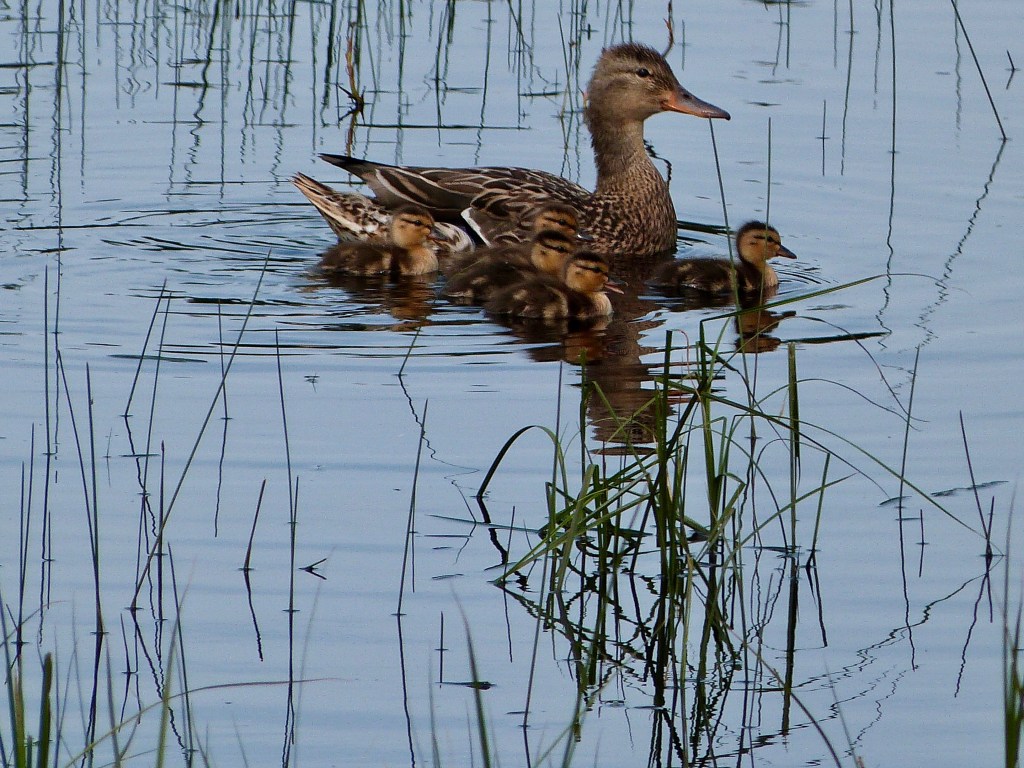
Dark would be blank without light; light would be empty but for the contrast of dark.


Dark would be blank without light; light would be empty but for the contrast of dark.

Victor Wayne Moore; born October 17, 1926, died November 14, 2013. Four years younger than my father, Vic served in the Navy during WWII, and later in Korea. He studied art education at Central Washington University (CWU), and after one year teaching in Richland, WA, Vic returned to CWU to work on his Masters degree. In June 1950, Vic married Roberta Galbraith Moore (Bobbie), and their son Mark, was born in 1952. In 1954 Vic was hired to be the Pullman High School (PHS) art teacher. Pullman became their home for 43 years.


In school year 1963-’64, I was a freshman at PHS, with a creative bent. Every day I entered Mr. Moore’s classroom, I was offered the opportunity to learn about making and appreciating art — and more. Vic was a man with a sense of humor and a free spirit I had never experienced before from a teacher. He asked provocative (and always appropriate) questions, laughed with us, got us thinking. Moreover, he made sure his classroom was emotionally safe for every-anyone to be in; it was an environment where, for one hour a day, I could just be me.
As my sophomore year began, I was faced with the choice of either continuing to participate in choir, or to continue taking art — I chose Vic Moore. What a blessing! Every school day, all four years of high school, I was in his classroom learning not only the basics of visual art, but the fundamentals of being a human being. He exemplified curiosity, and demonstrated, through his demeanor, an acceptance of all who came into his class. The last time I visited him, in 1997, Vic was expressing his whimsical take on politics through a series of whirligigs. At the time I had been a high school counselor for fifteen years, and as I left to catch my flight home, I thanked my lucky stars to have known Vic Moore. He personified a quality I value, and have worked to pass on to the children under my guidance over the years; the more honest we are with ourselves, the more genuine we are in our relationships with others, the better this sweet, absurd world will be.
Bless you Vic Moore; mentor, teacher, creative spirit, now released to the universe.

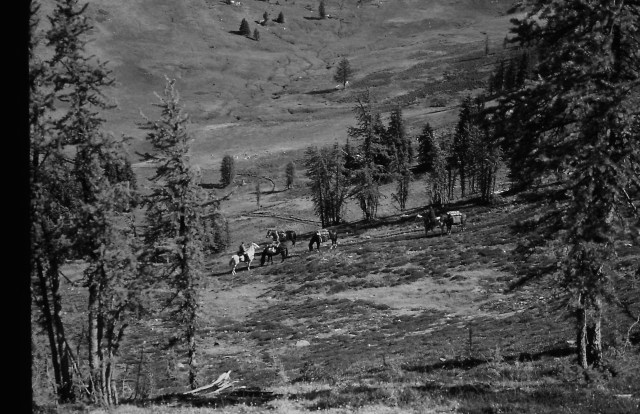 In the mid to late 1960’s my father, mother, brother, and family friends took our horses to the high Cascade Mountains in Washington, to hunt deer. Someone in the party snapped this photograph, looking down across a valley. The horses provide a sense of just how wide open this space was. I always wanted to go with them (although I am not a hunter), but school kept me home. Thank you Dad, for packing in good camera equipment, and sister Lori, for scanning all the slides to a flash drive, and giving them to me.
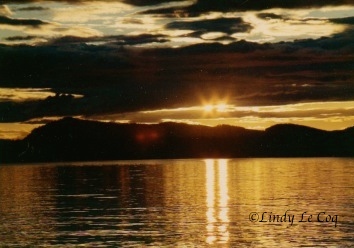 After a storm, an illusion of two suns slide behind Waldron and Saturna Islands. Photo taken from Beach Haven ~ Orcas Island, WA ~ USA.


If it heals, treats or transports its fair game.
As many as 20,000 people a day visit Oregon Health & Science University’s main campus on Marquam Hill. OHSU is Portland’s largest employer, medical destination, and home of several medical schools. Marquam Hill is also home to a residential neighborhood, nature trails, and hospitals owned by Shriners and Veterans Affairs. However, from downtown Portland, Marquam Hill is accessible by just two 2-lane roads. To keep Marquam Hill accessible, an ambitious solution was needed. After reviewing a few different options, the City and stakeholders determined a tram was the best possible solution.
The Tram was designed by Angelil/Graham/Pfenniger/Scholl, based in Zurich, Switzerland, and Los Angeles. The custom-designed cabins were made by Gangloff Cabins of Bern, Switzerland.
The Tram cabins travel 3,300 linear feet from South Waterfront to Marquam Hill. Traveling at 22 miles per hour, the Tram cabins rise 500 feet during the four-minute trip. Each of the two cabins have a capacity of 79 people, including the operator. The Tram operates load-n-go. If you miss one, expect another in just a few minutes.


I have always loved being outside, especially when spring warms into summer. Over the thirty years I have worked to landscape my grounds, making special places for conversation and gathering has been a priority. These photos, taken at my retirement party, demonstrate what I mean.
Walking back from the beach to my room at The Breakers, I heard the boisterous clamor of crows harassing a predator.
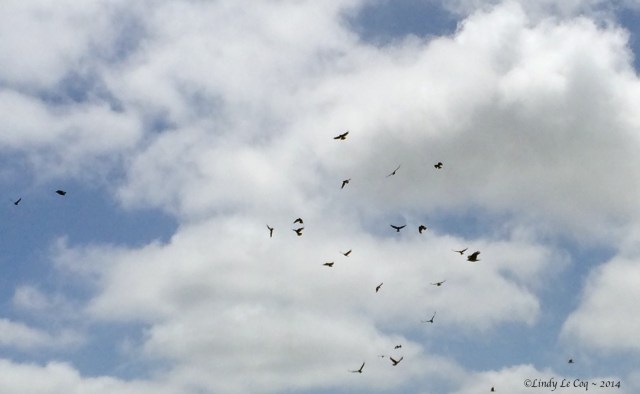
Long Beach, WA USA
Crow Facts:
“Crows are members of the Corvidae family, which also includes ravens, magpies, and blue jays. Loud, rambunctious, and very intelligent, crows are most often associated with a long history of fear and loathing. They are considered pests by farmers trying to protect their crops and seedlings. Many people fear them simply because of their black feathers, which are often associating them with death. But research demonstrated in A Murder of Crows proves crows are actually very social and caring creatures, and also among the smartest animals on the planet.
Crows are very social and have a tight-knit family. They roost in huge numbers (in the thousands) to protect themselves from enemies like red-tailed hawks, horned-owls, and raccoons. Crows also use at least 250 different calls. The distress call brings other crows to their aid, as crows will defend unrelated crows. Crows mate for life.
A group of crows is called a “murder.” There are several different explanations for the origin of this term, mostly based on old folk tales and superstitions. For instance, there is a folktale that crows will gather and decide the capital fate of another crow. Many view the appearance of crows as an omen of death because ravens and crows are scavengers and are generally associated with dead bodies, battlefields, and cemeteries, and they’re thought to circle in large numbers above sites where animals or people are expected to soon die.
But the term “murder of crows” mostly reflects a time when groupings of many animals had colorful and poetic names. Other fun examples of “group” names include: an ostentation of peacocks, a parliament of owls, a knot frogs, and a skulk of foxes.”
source: http://www.pbs.org/wnet/nature/episodes/a-murder-of-crows/crow-facts/5965
Once again it is June, and we have a family of Chestnut Backed Chickadees on the feeders. There are two fledges who cling to any surface they land on, while their parents snag beak-fulls of suet and rush to feed them. It is captivating to watch.
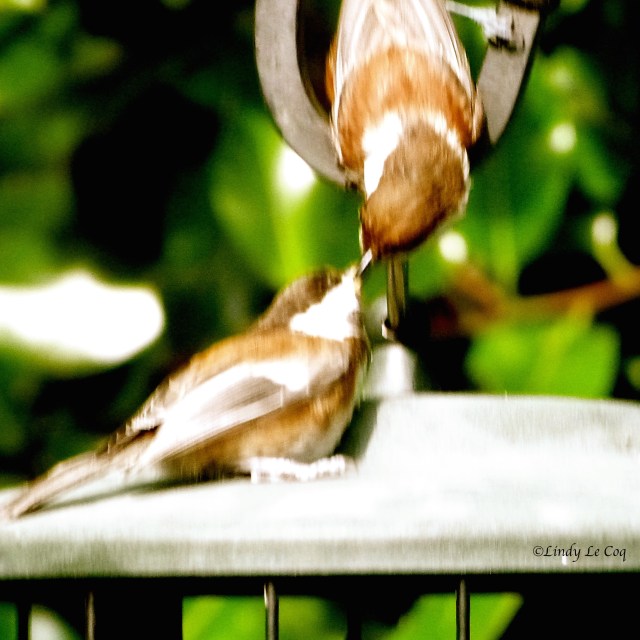
It’s also hard to snap a crisp photo of the activity!
How plants climb and entwine to gain a spot in the sun is fascinating.
Here are a few from my gardens, twisting their way skyward.