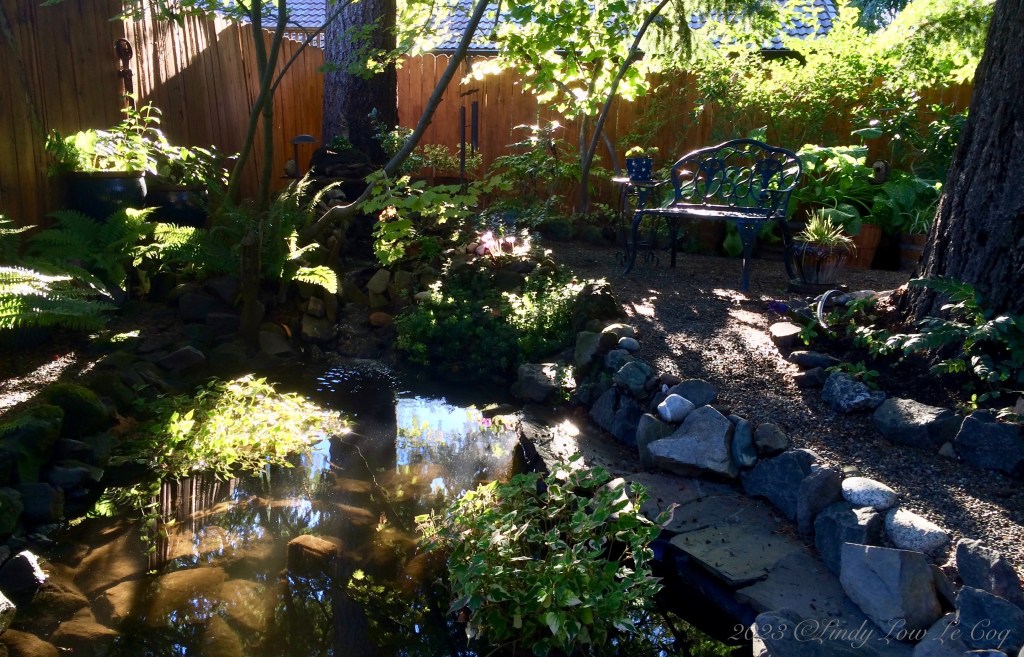
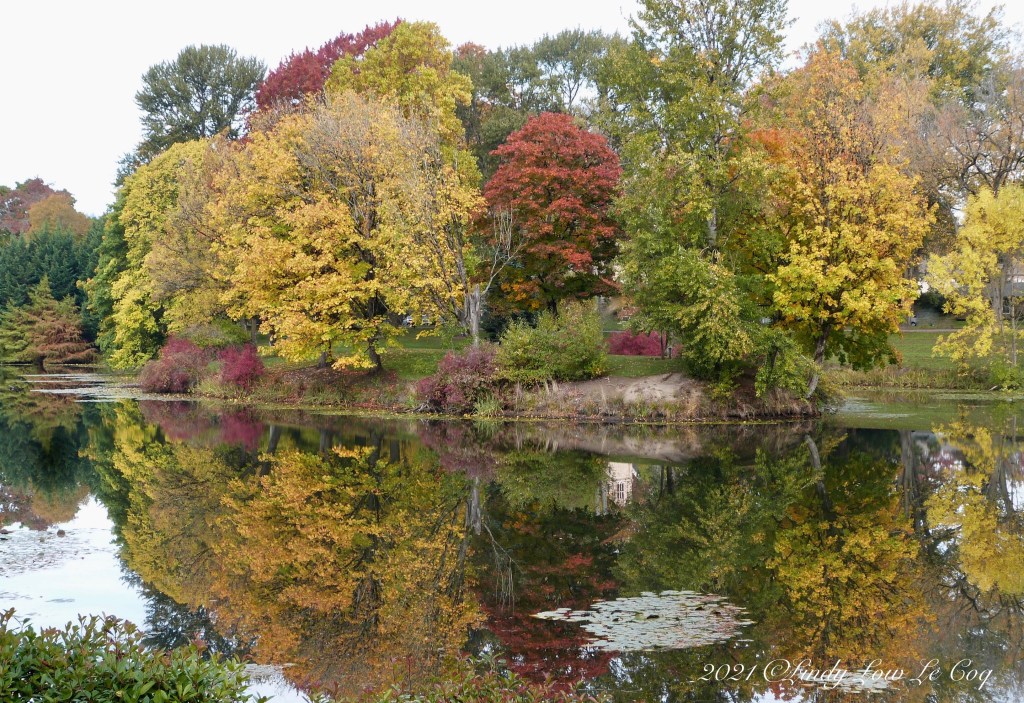
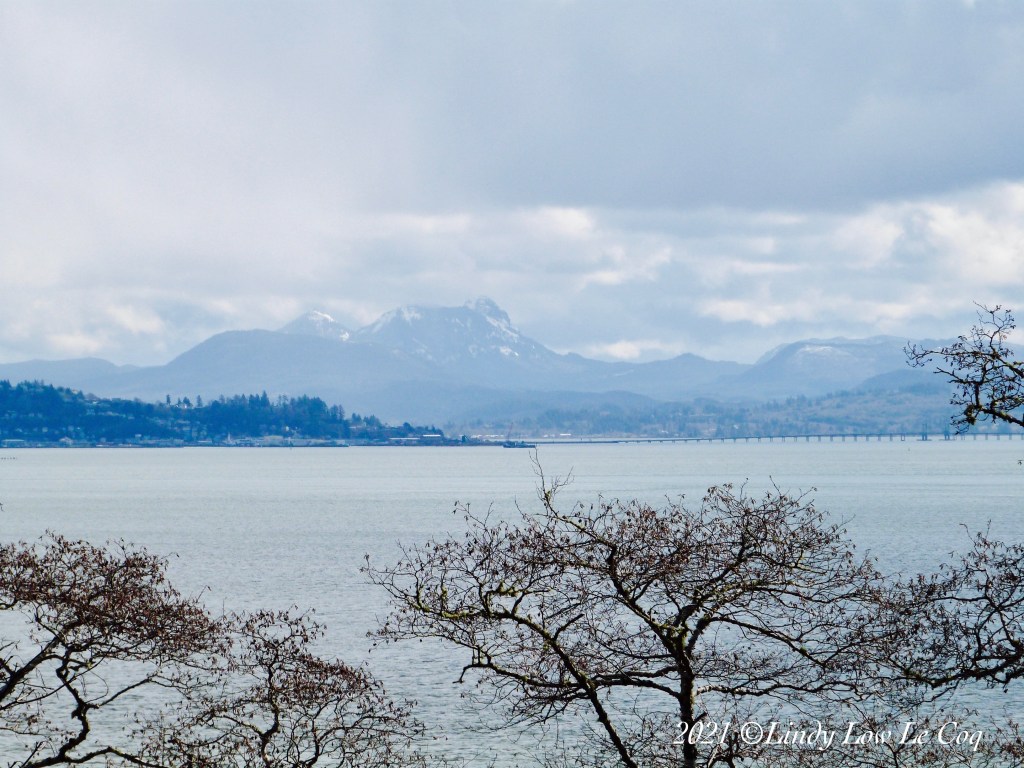
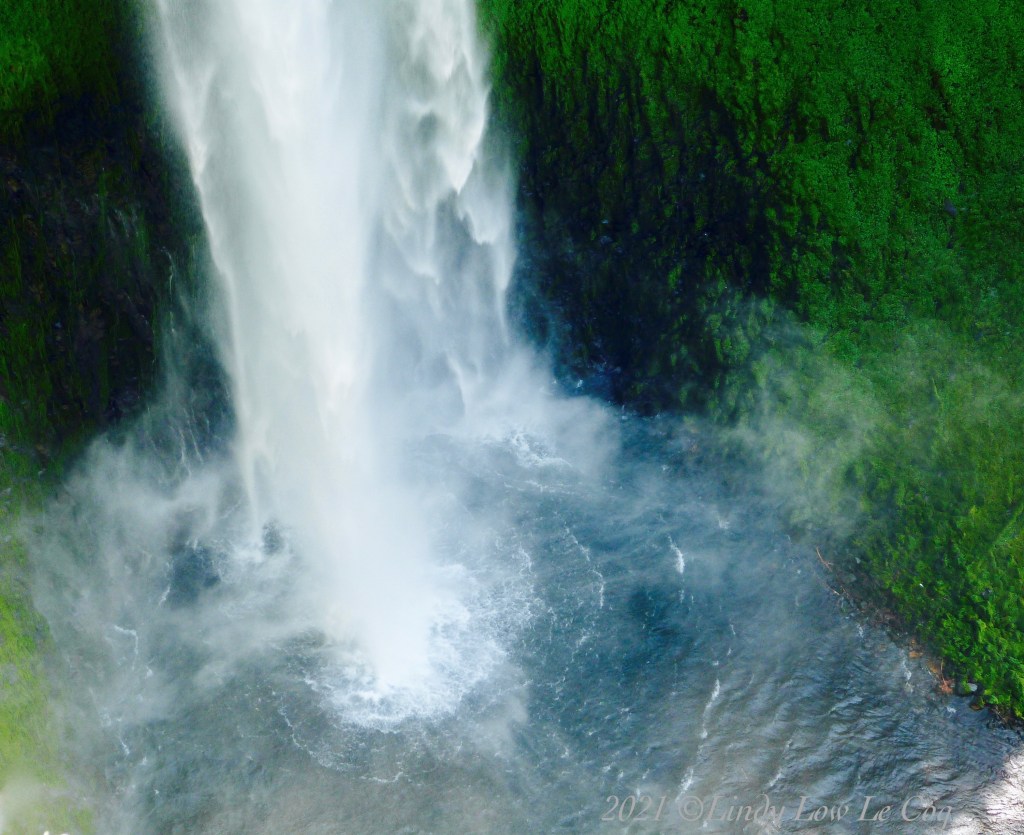
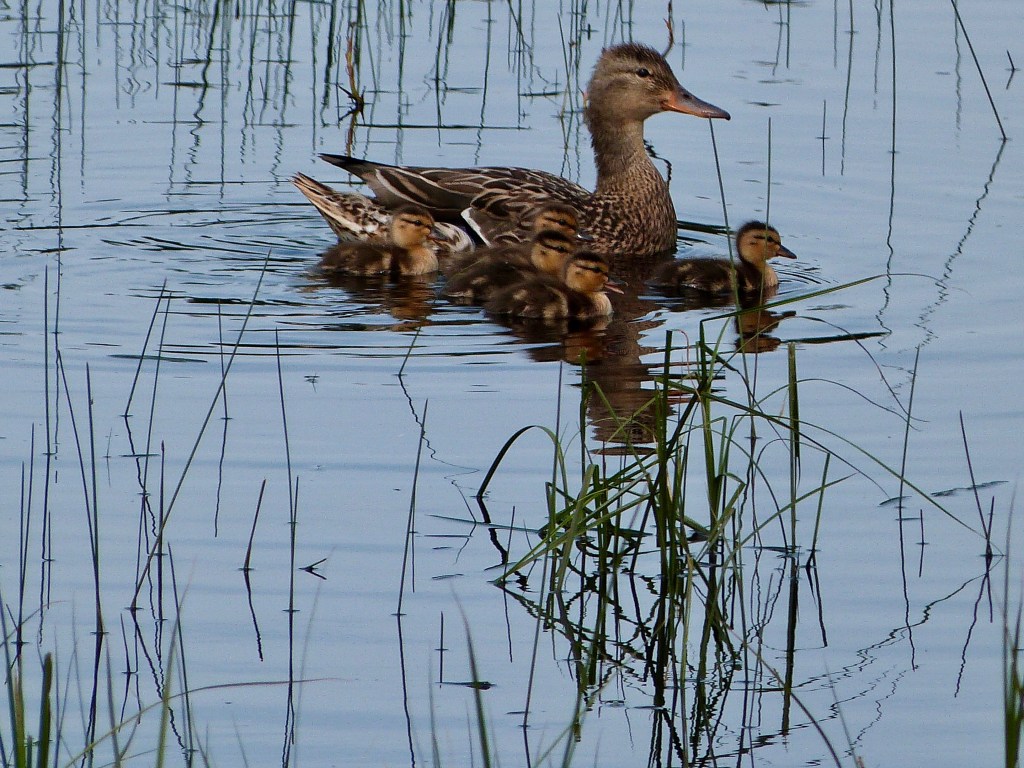
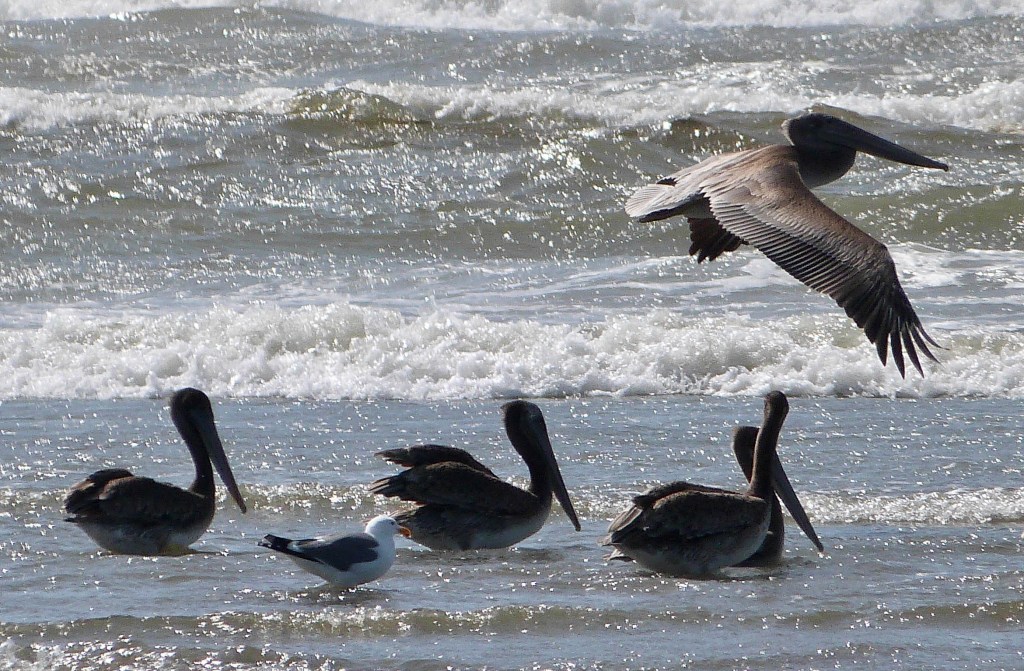
If I cannot be out in nature, I do my best to simulate the effect. to create “an Oasis”. At my home in Vancouver, WA we have 10 tall evergreen trees, two maple, several vine maple and many shrubs that provide a welcoming home for birds. The sound of water is an essential, so I built a pond & waterfall 27 years ago. It has shifted and looks like a natural stream after all the years, and I love to sit out by it to read or write.
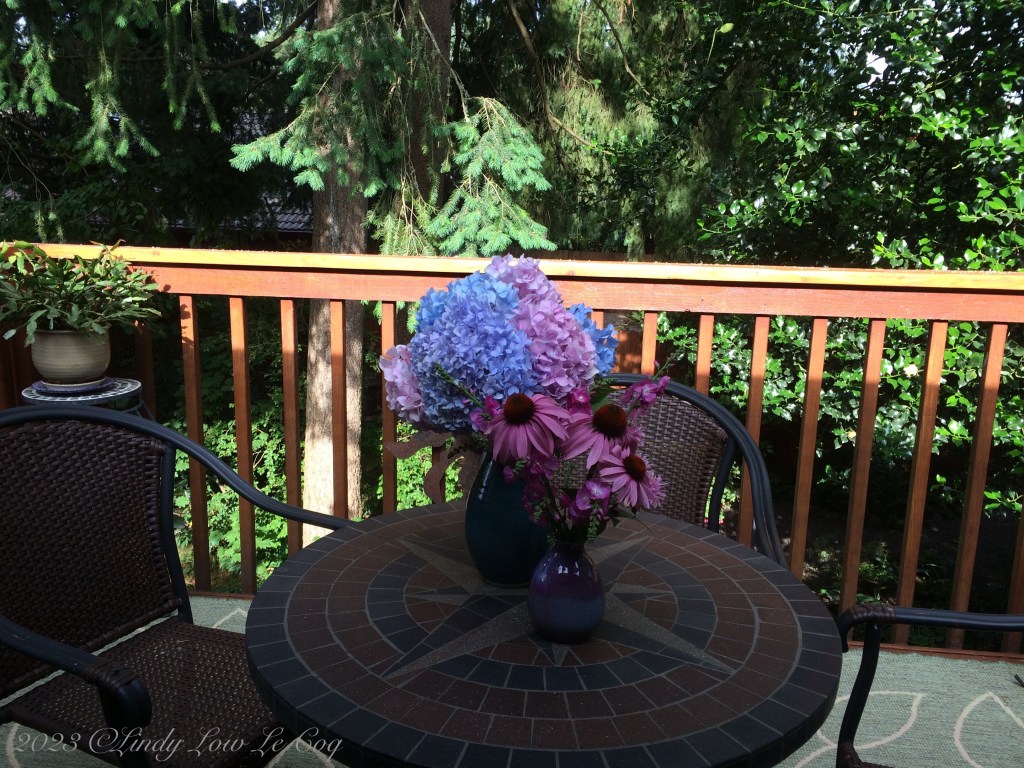
Spring through fall, as weather and temperatures allow, I like to sit on our deck with my morning coffee and in the early evening with a glass of wine. I clear emails, take care of other business on my computer, and read or write. The water fall is audible here, and sometimes it feels like I’m in a tree house.
After three months away from Long Beach, we made our first trip out this week. All the summer visitors are back at work and school, so things in our condominium are quiet – just the way we like it! Once all our supplies and gear are out of the truck and into the condo, Max, Daisy and I romp down to make sure our beach is still there!
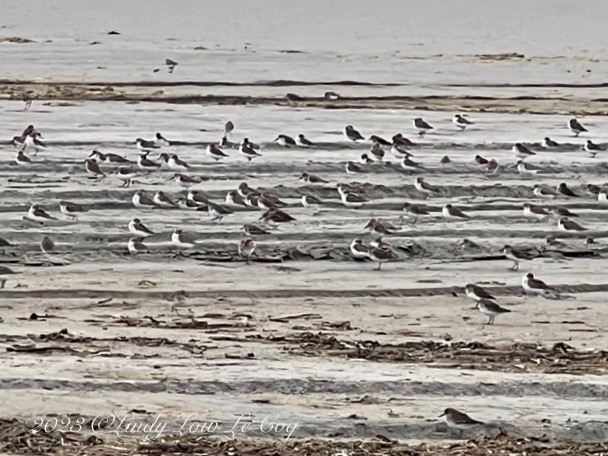
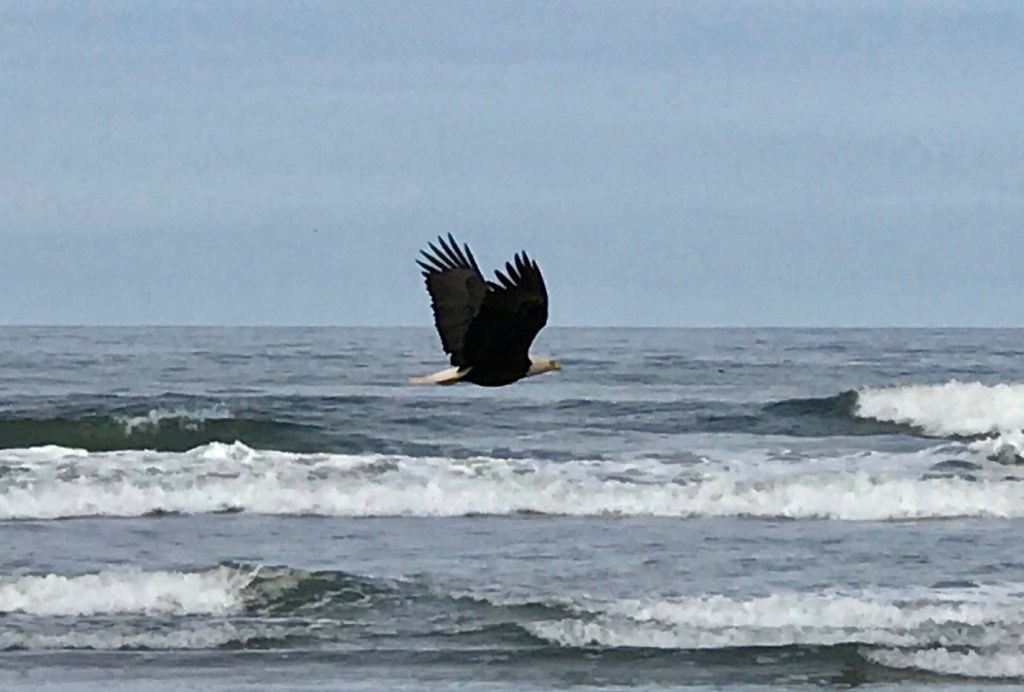
Yup! Still there! I don’t even bother to bring my Panasonic when I’m walking with the beagles, however the iPhone 13 serves me well. It’s only when I could otherwise get a good shot of birds that it isn’t adequate. Below one of many flocks of Sanderling (and friends) on the beach.
Yesterday, after taking the beagles for their morning neighborhood walk, I went to the beach with my Panasonic. The tide was low, so there weren’t many birds, however a man down the beach had about 20 kites in the air, quite a feat and a fun sight! I’m guessing it is an activity that recharges his batteries.
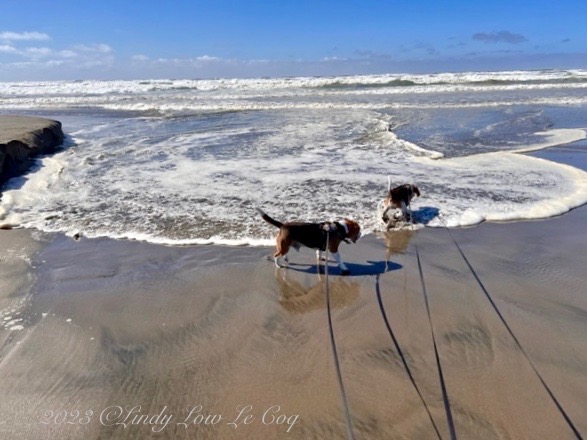
Then it was time to take Max and Daisy for a real beach walk, which most definitely recharges them. They both get to bark as loud and long as they want, and Daisy has great fun challenging the charging waves!
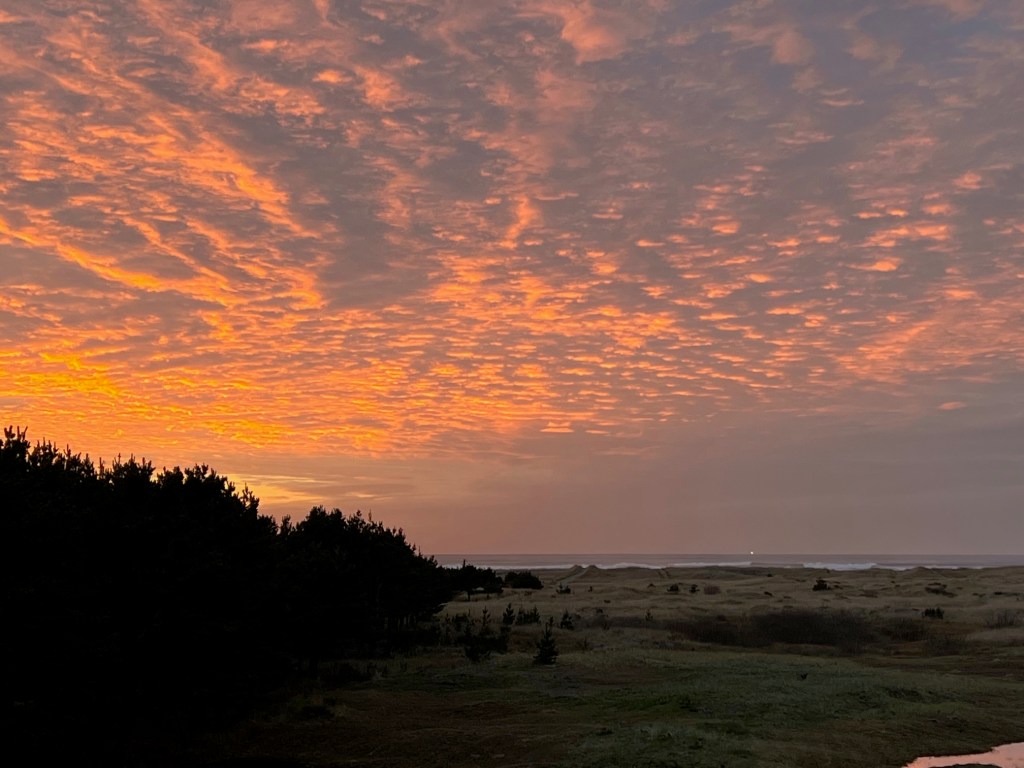
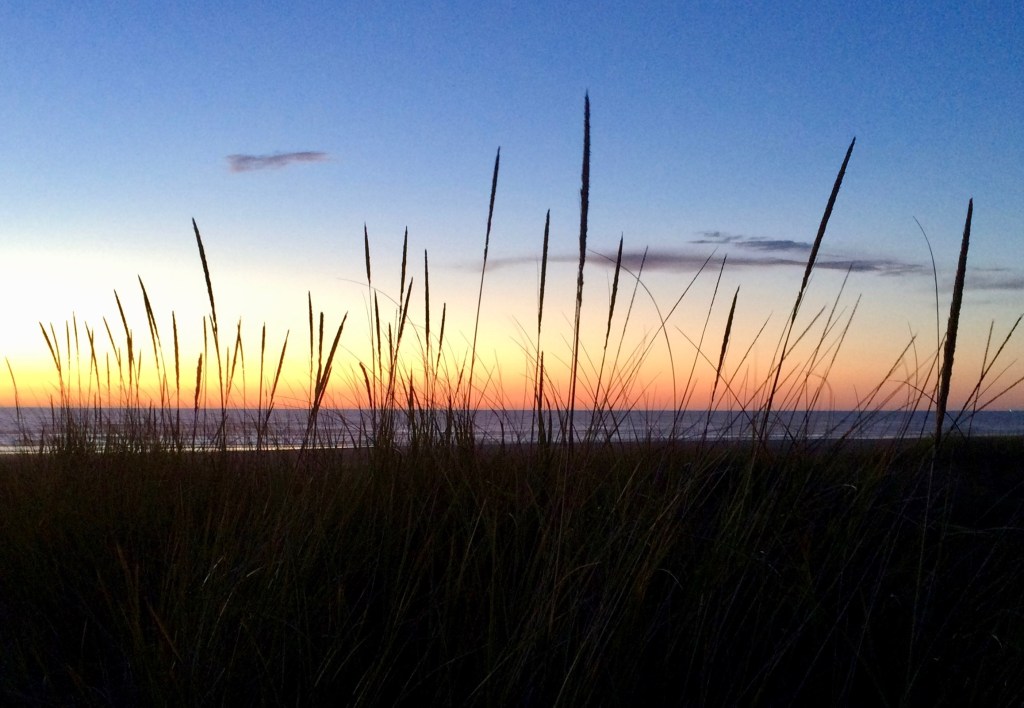
Afterward, back to the condo where I get a shower, dogs get their bones and Creighton and I have wine, music, talk and reading time. It isn’t every day that we get a gorgeous sunset, and last night it felt like a blessing to have such a stunning end to our first full day back.
On your walk with life, please honor our earth, encourage dignity and share kindness. 🐾
A big welcome to Egidio for taking on the responsibility of hosting this weeks Lens-Artists Challenge. It takes a lot of energy and thought to develop the challenge theme, and even more to respond to all of us out here who take on the challenge. Thank you Egidio (hope I got your name right!).
This week Donna of Wind Kisses, invites us to capture the essence of time through our photographs. In the Pacific Northwest, once again the season is changing.
Spring is now a sweet soft memory…
…vibrant summer is rapidly slipping out of her bright summer dresses…
…and into a warm golden-umber shawl.
“To everything there is a season, and a time for every purpose under heaven.” Pete Seeger
December 1971June 2023
This pea warehouse was a quarter mile south of our farm on the Lewiston Highway, Pullman, WA. When I was in high school, I would walk there with my sketchbook and draw different aspects of it . One of my BAFA classes at WSU was photography. On a cold, grey winter day, I plodded through deep snow to take shots of “My Warehouse.” This past summer while I was in Pullman, I visited it once again.
“Time goes on, things change from moment to moment, and a photo is all that remains of the moment past.” E.L. Doctorow
A big thank you to Donna for providing a wide open challenge for us this week!
After the bright primary color photos from last week, Anne Sandler suggests we turn down the volume a bit and focus on monochrome and black/white photos this week. My camera is set on color and auto focus most of the time. The light at Long Beach, WA often creates a natural sepia look, as in the photo below. I have shown it before, and because I love it, I’m featuring it again.
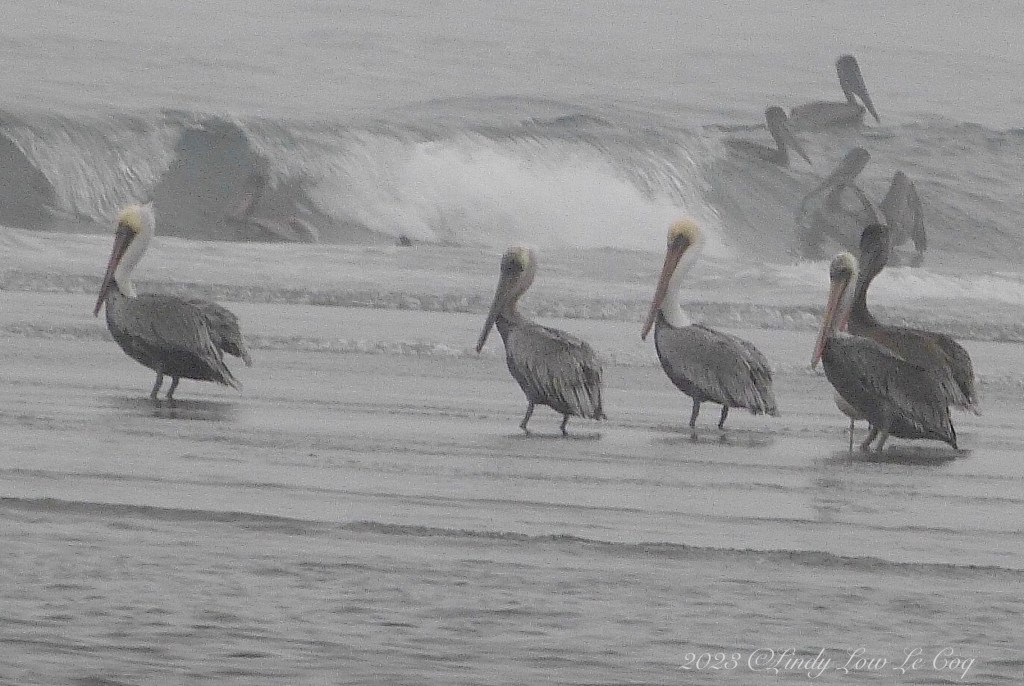
I came upon a large flock of Brown Pelicans one foggy afternoon, as they gathered to rest and recuperate along the shoreline. The color in this shot is just as it appeared to my eye in the moment.
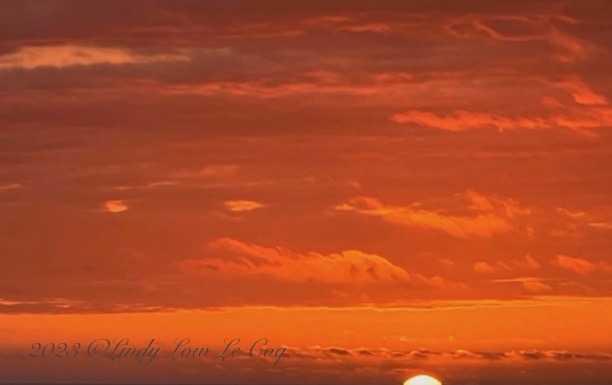
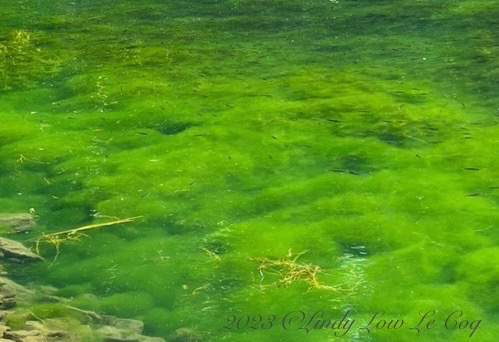
Monochrome isn’t always subtle grey or sepia tinged. Varying tones and shades of one hue also qualify and we are encouraged to spotlight those photos this week. Below an orange-sherbet sundown, rain-drenched peony, and small-fry in the shallows at Sunset Cove boat launch, Odell Lake, OR.
Though my original photographs are always in color, Cee Neuner (https://ceenphotography.com/) has taught me over the years to look for compositions that might be improved when converted to black and white. Here are two that I found in my archives today. To my eye, they both are more interesting in black and white.
On your walk with life, please honor our earth, encourage dignity and share kindness. 🐾
Here’s to Anne of Slow Shutter Speed, for this invitation to explore another facet of photography!
This week, Sylvie invites us “to play with primary colours.” Red, yellow and blue draw our attention to the subject. I’m sure the little boy in the photo below would have found the playground equipment, however the color certainly adds a sense of excitement and fun to the scene.
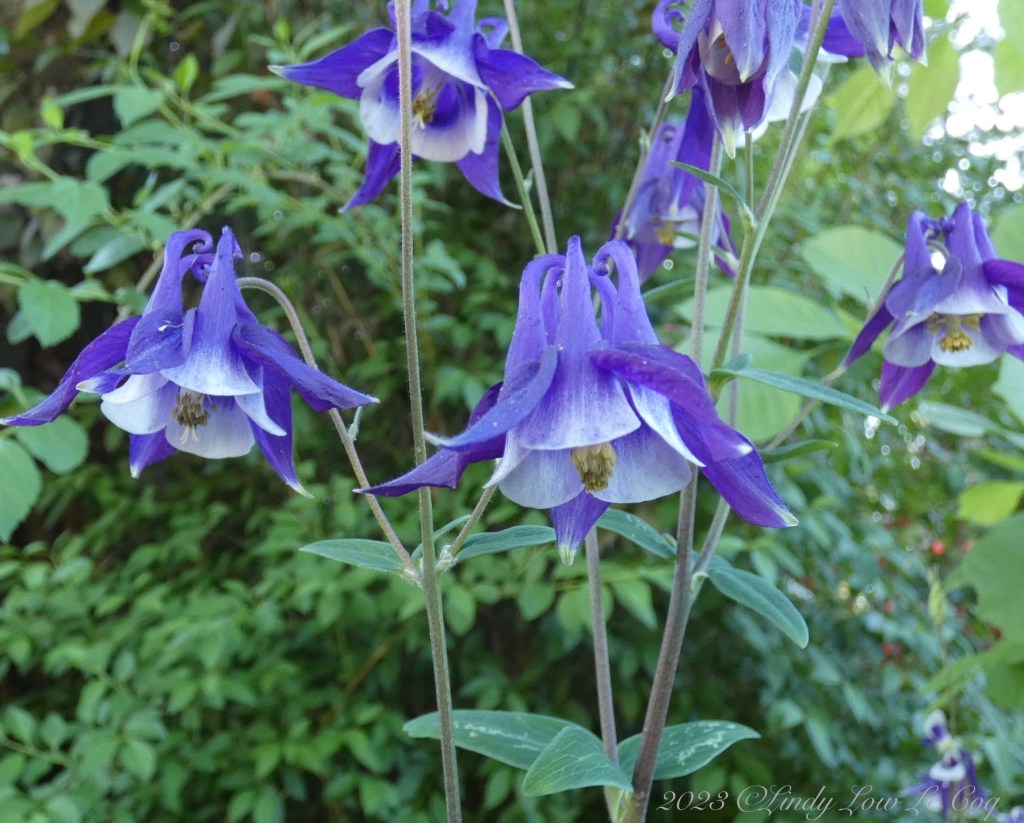
Sylvie ask if we “actively look for primary colors or enjoy being surprised by the possibilities they present?” I love color – all colors primary and all the blends. Here are some primary hued blossoms.
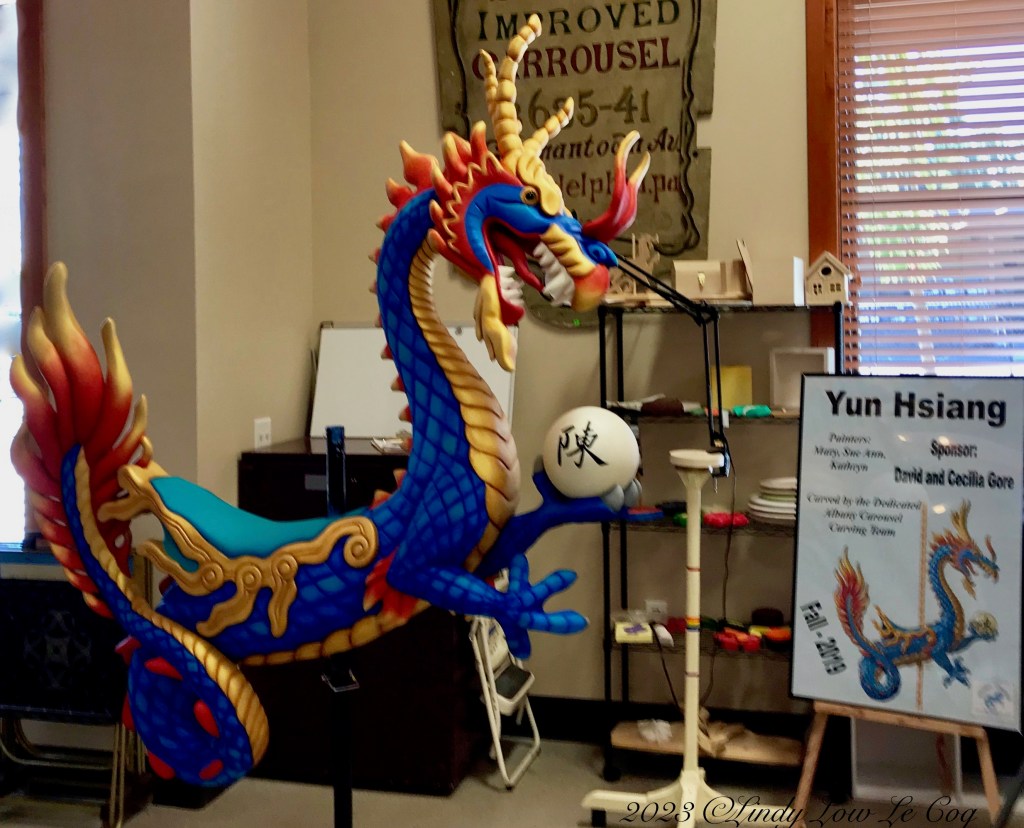
The Albany Carousel Museum has a lovely functioning carousel and workshops where craftspeople design, carve and paint the animals sponsored by donors. Behold Yun Hsiang, a dragon appearing quite fierce and vital with its red and yellow flames and blue scales, not to mention those sharp white teeth!
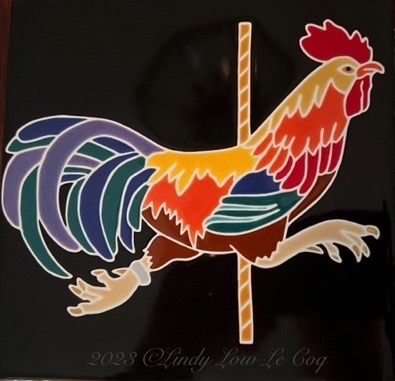
While at the museum, I bought a ceramic tile featuring the rooster carousel character which resides in my kitchen. With the last name Le Coq, I can’t pass up a beautiful piece like this one.
In Spokane last June, I had time to stop and take photos of street art, a subject I rarely focus on. Perhaps that’s because most of the time I’m not in cities where street art can be found just about everywhere! The work below uses primary colors, angles and lines to create a feeling of high tension.
On your walk with life, please honor our earth, encourage dignity and share kindness. 🐾
Thank you to Sylvie for giving us a wide open challenge with color.
This week John of Journeys with Johnbo, challenges us “to share images featuring faces, in a crowd or standing alone, human or animal. Selfies are approved.” Since most photos of me are taken by someone else, I rarely show them, however this week I’m going to fudge a bit and offer two with my face in the crowd, both photos taken by unknown helpers!
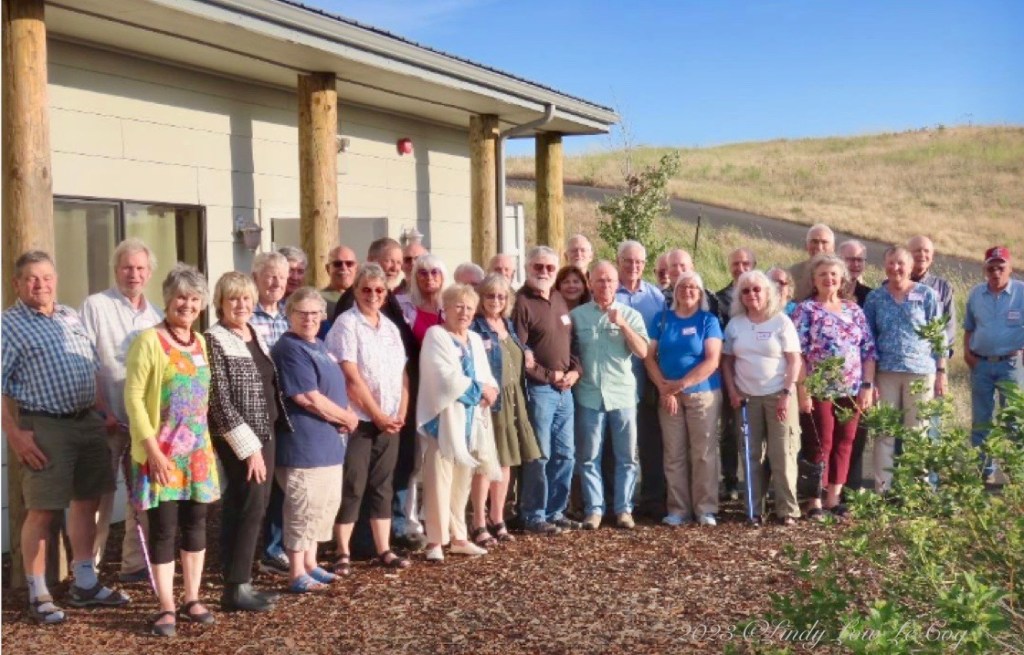
In June I attended a reunion of my Pullman High School class of 1967. I wish the photo was more clear, still you can see we are quite a mix of white-haired folks, mostly smiling! (I’m wearing pink in the middle row.)
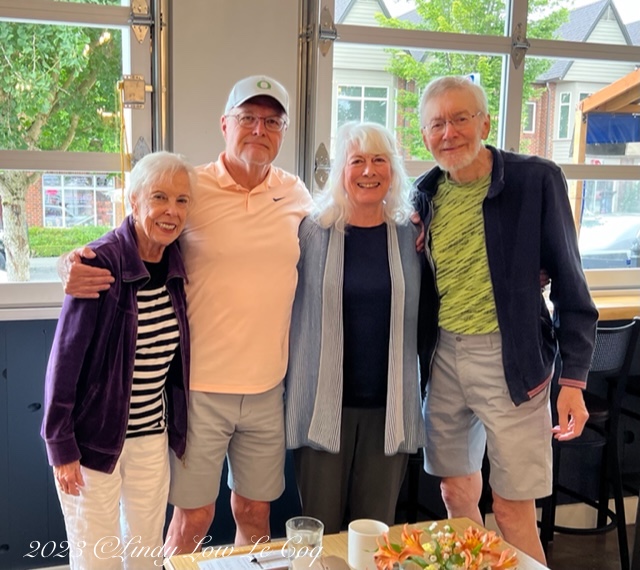
Every summer since I retired in 2012, the three counselors I worked with for many years and I gather for lunch and to catch up. The photo below is from last year, because this year Greg (between Ruth and me) had an emergency and couldn’t be with us. John always gets to choose where to have lunch as he is vegetarian/vegan. Reuniting is something we all look forward to, and I’m going to get us together this fall, so that we can hear from Greg!
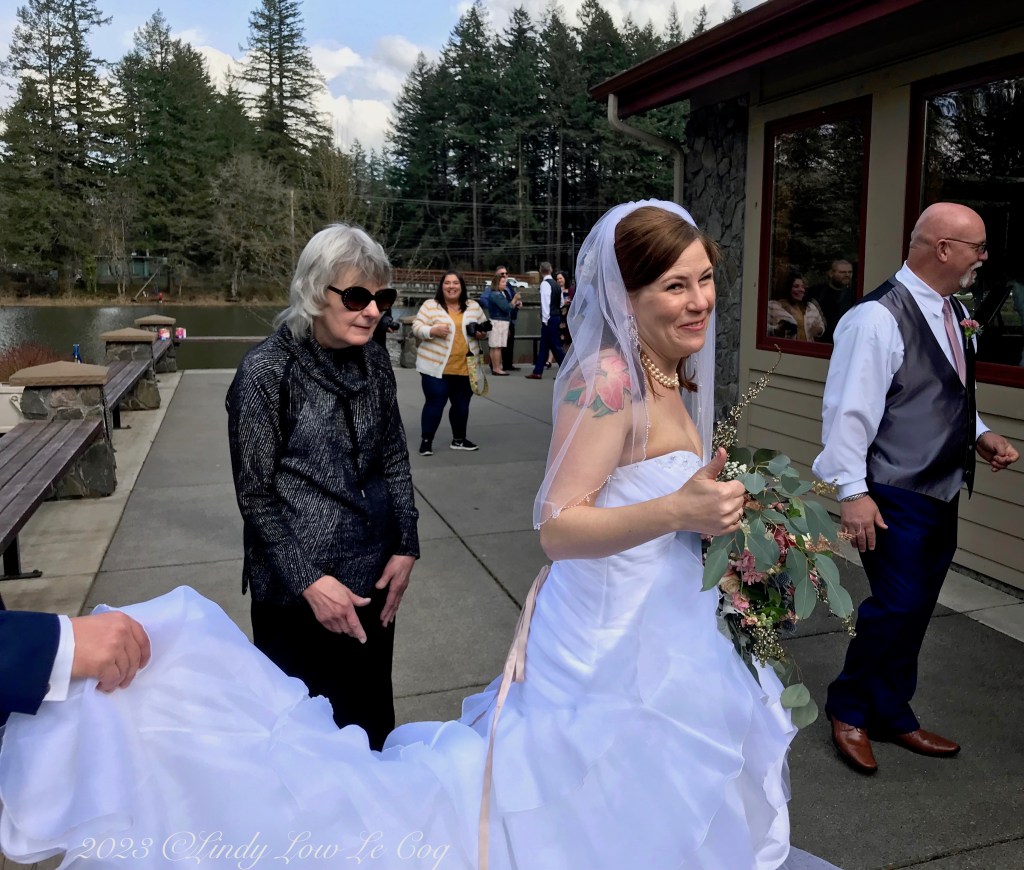
Joellene was a beautiful bride and her spirit shines through as she gives me a thumbs up.
My dear friend Jocelyn, deep in thought as she answers a text. We were able to connect for a day in Spokane, on my way to Pullman for the class reunion.
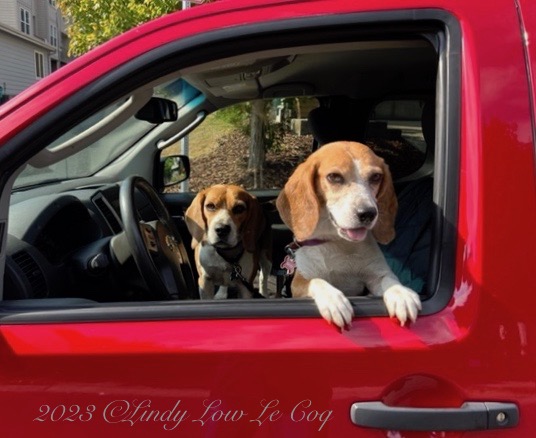
Can’t pass up an opportunity to feature Max and Daisy waiting for me in the truck!
On your walk with life, please honor our earth, encourage dignity and share kindness. 🐾
In 1965, my Pullman High School art teacher Victor Moore, taught me to put my thumb and index finger together to make a frame through which I could look to select discrete compositions. Such a great lesson – an always “at hand,” portable way to bring subjects into focus.
In June 2023, I gathered together with 33 classmates from those years for a weekend reunion. One of the events offered on Saturday morning was a hike up Kamiak Butte. After all the years I’d lived in Pullman, this was my first trip to visit this local treasure. A small group of us took advantage of the invitation, and even though it was hazy, I enjoyed every vista along the way. Above, is a view of the verdant, rolling Palouse hills framed by evergreens
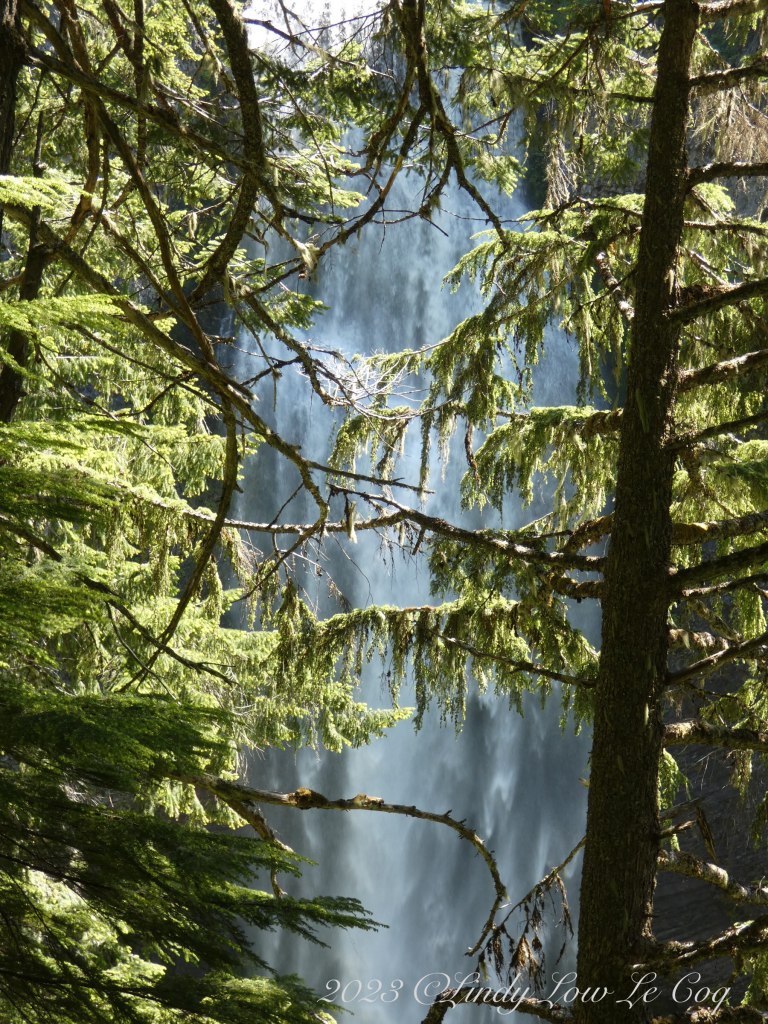
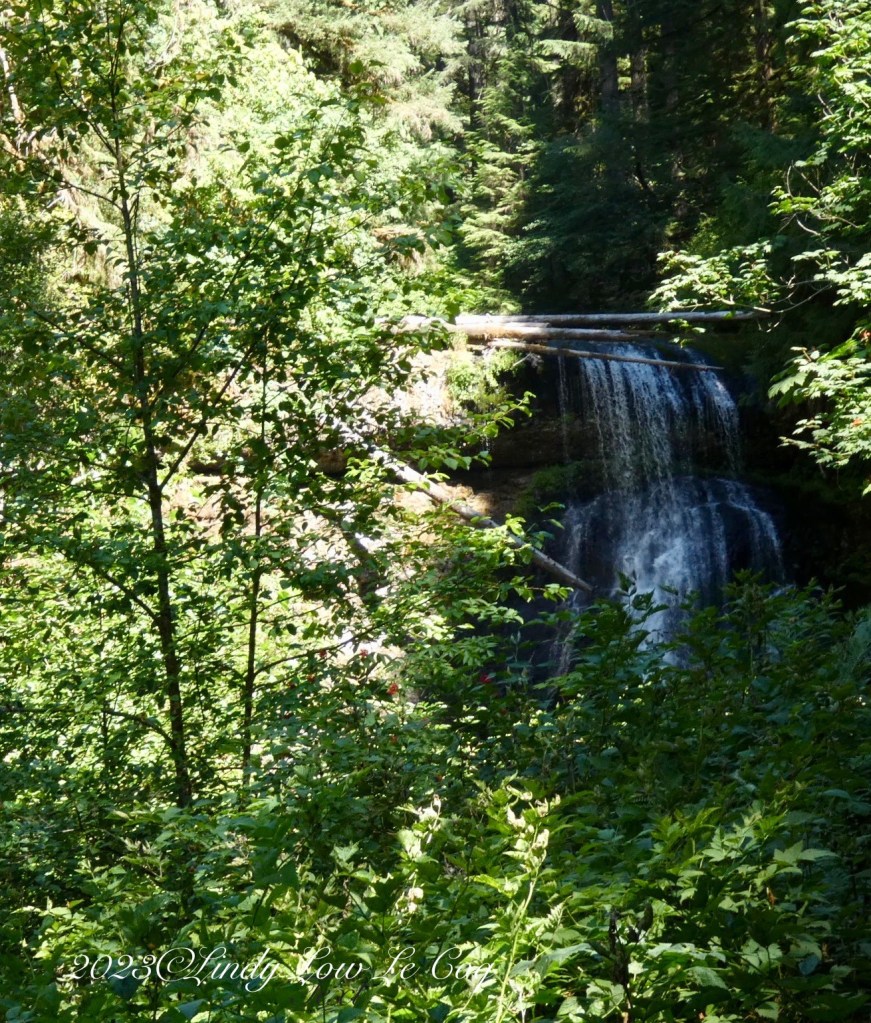
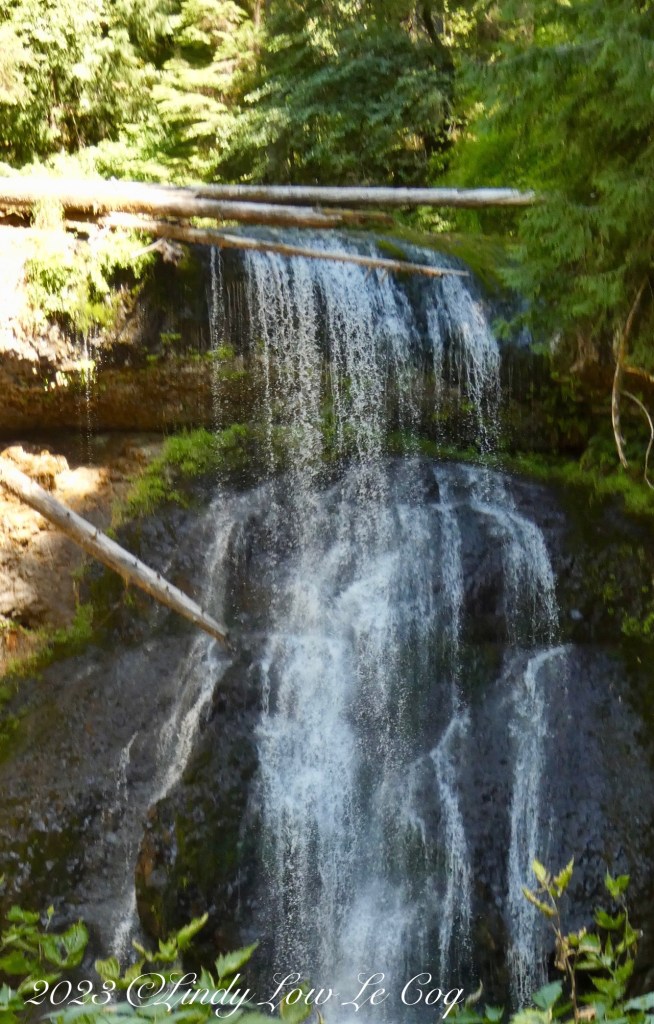
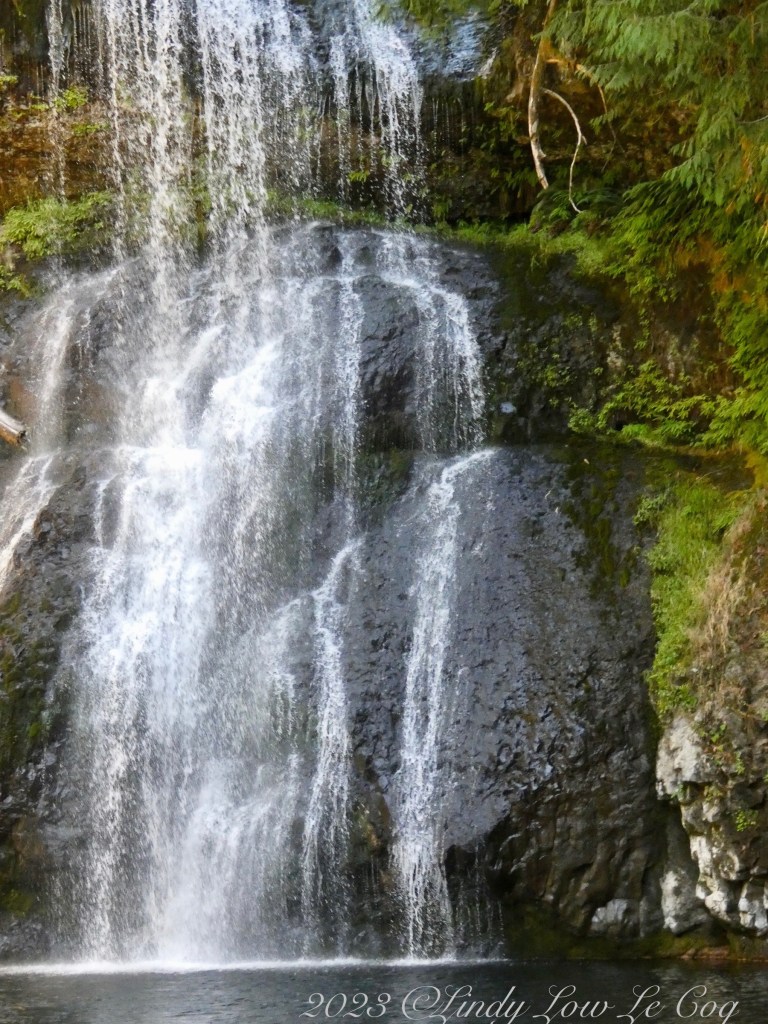
Salt Creek Falls, in central Oregon, is a lovely waterfall and well maintained park that I have featured in other posts. Above is my favorite shot from this summers visit. Seeing the falls cascade through a veil of native evergreens fills my senses with the sight, scent, sound and feeling of being there.
Another landmark I have featured in previous posts is the North Head Lighthouse in Camp Disappointment State Park, Ilwaco ,WA. From the glass enclosed top (where the Fresnel light had been) we see the Pacific Ocean off to the distant horizon where it melds into the clouds.
Sometimes cloud patterns create a frame in the sky. Here, an ordinary sunrise is made more dramatic by the vapor formations leading to and from it.
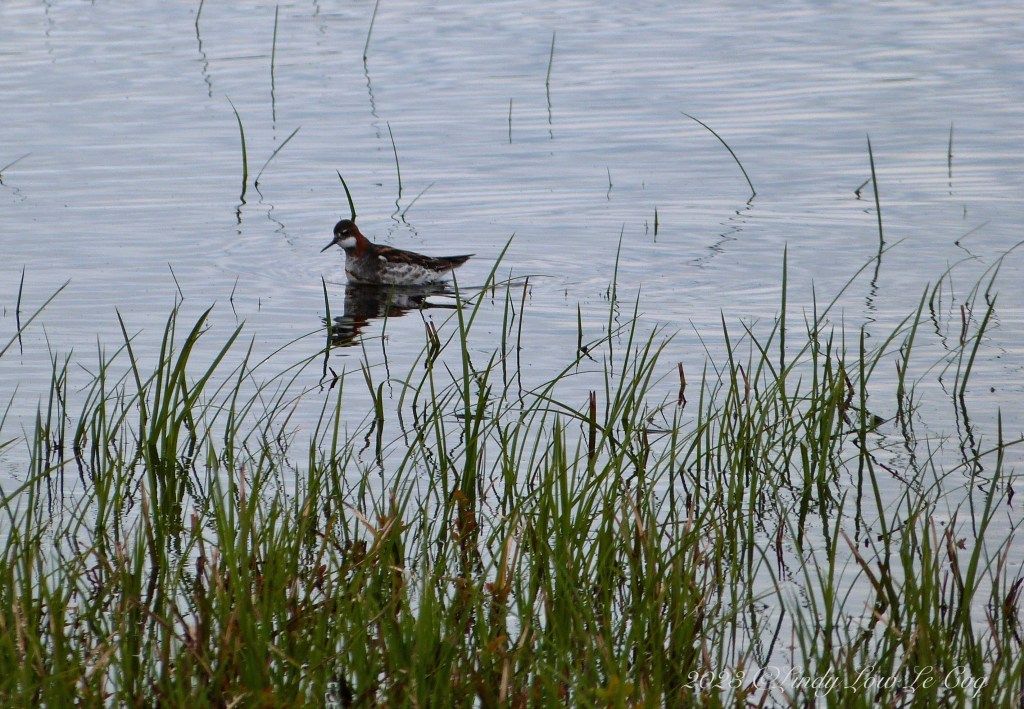
Red-necked Phalarope (Phalaropus lobatus)
Birds are one of my favorite photography subjects and catching them in their natural habitat adds to my joy. Here, a phalarope swiftly paddles through the marsh pond, stirring things up in search of small prey. The pond grasses provide visual perspective and context.
On your walk with life, please honor our earth, encourage dignity and share kindness. 🐾
A big thank you to Amy, who presents beautiful examples of framing in her Lens-Artists Challenge post.
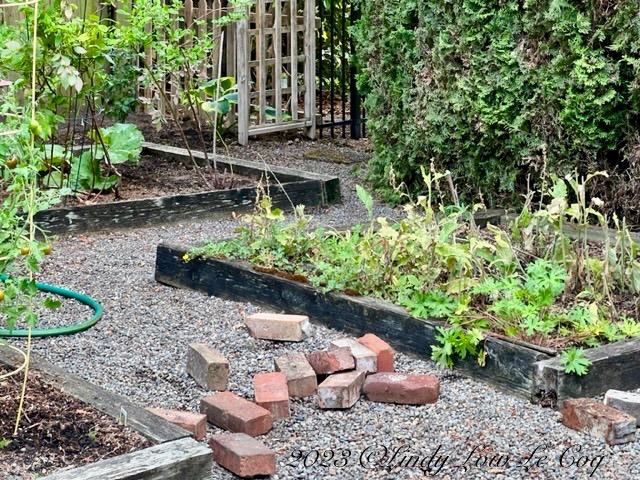
Ann-Christine hit the nail on the head for me with this week’s challenge. Some of my high sunshine gardens were going to waste, with no fruiting vegetables or pretty flowers. After I hired a crew to trim back the arborvitae on one side, and remove them along the fence, I was inspired to dig-in and and get things done! Below, one of the garden plots with fading foxglove, and scattered bricks for the border.
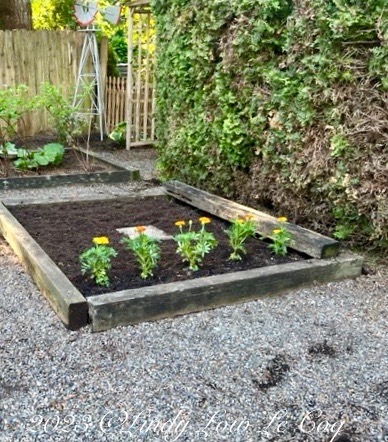
As these things go, it has been a work in progress for a couple weeks and is still not finished! The above space has been transformed into a strawberry patch, with companion plants of Marigold and Thyme. I’m looking forward to sweet berries next spring.
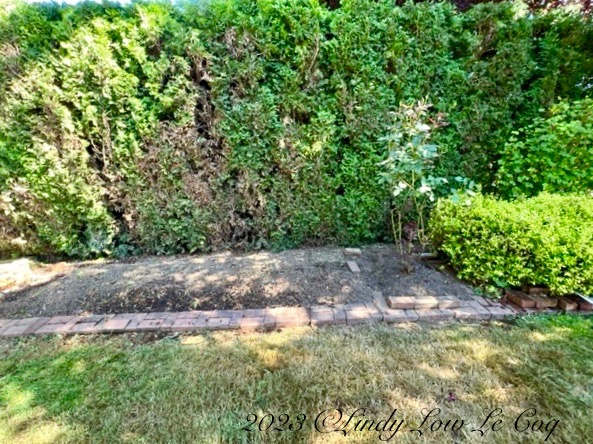
Another plot that I’d made a stab at turning into a rose garden with companion plants, was sputtering. Only one of the roses was pretty and bloomed regularly, and the ground cover had overtaken it all. Below is the cleared space and work in progress with bricks.
The wooden borders were rotted, so I removed them and built edges with old red brick that I’ve had for years and used in other ways. I love it when I can repurpose a resource and not have to buy new. A few unused cottage stone helped shore up the space between the arbor and garden.
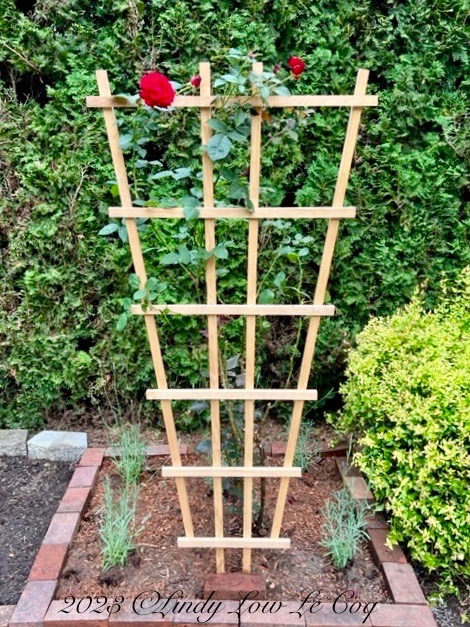
The rose is Oh My!™ a floribunda with medium, bright red, fragrant flowers. After constructing its border, I added French Provençal Lavender as companions, and blessed it with a new trellis. The larger rectangular garden, to the left of the rose square, now has some heirloom zucchini seeds in four hills that may produce before the season is over. The space will be used next year for warm loving vegetables that I’ll select between now and then!
Whenever I step back and look around me, I always see “more to do.” That’s how it is and since I love to have projects in progress, this one will keep me busy for a while. Thank you Leya for an excuse to share what I’ve been spending my time and energy on!
“To plant a garden is to believe in tomorrow.” Audrey Hepburn
On your walk with life, please honor our earth, encourage dignity and share kindness. 🐾
Walking With Eagles is a collection of original poems and photographs by Lindy Low Le Coq. A lifelong naturalist, amateur photographer and bird enthusiast, Lindy’s verse, composition and photographs open a window into the essence of her subjects. Her poems and photography reflect the rich natural wonders of the Pacific Northwest.
Bald Eagles mature over the course of five years. Walking With Eagles invites the reader to take a poetic and visual tour of this odyssey.
view ~ Walking With Eagles ~ in top menu bar for a preview, though the folio is much nicer!