John Steiner takes the lead this week to start the 2023 Lens-Artists Weekly Photo Challenges with an invitation to share our “favorite images captured in 2022.” Thank you John for adding your talents to the Lens-Artists team!
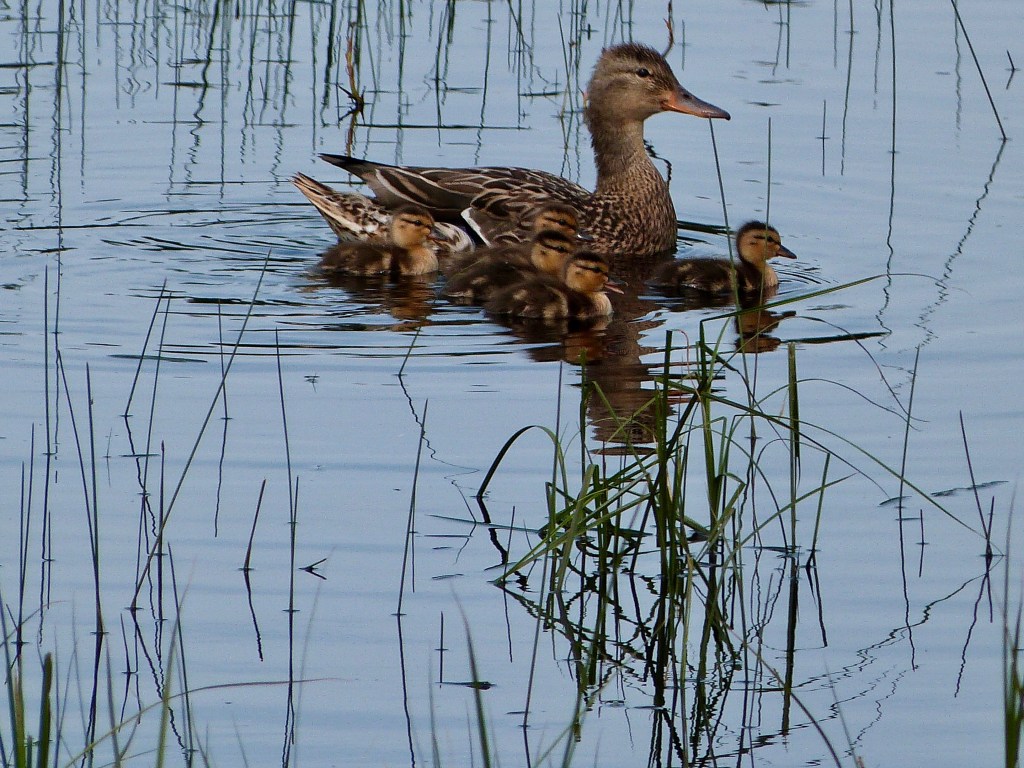
I’ll start with my first choice shot of 2022. Why do I love it so? Because the light is incredibly soft filtered through fog as four Mallards silently paddle across a pond. It’s the quiet beauty of the moment that enchants me.
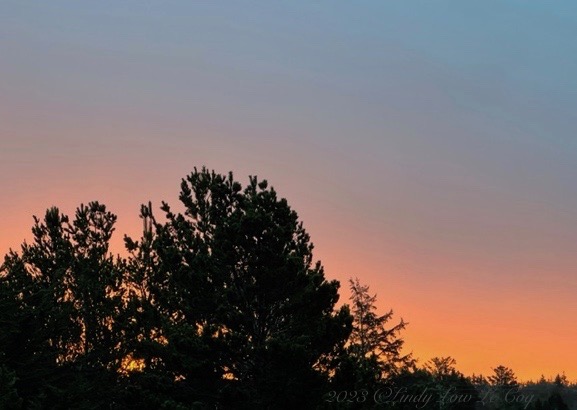
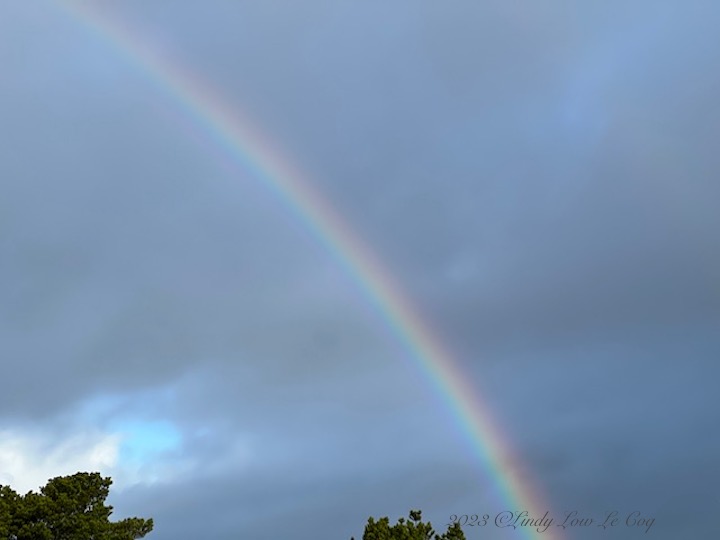
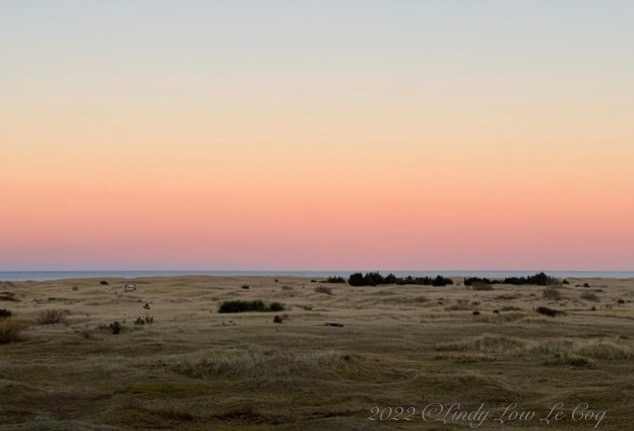
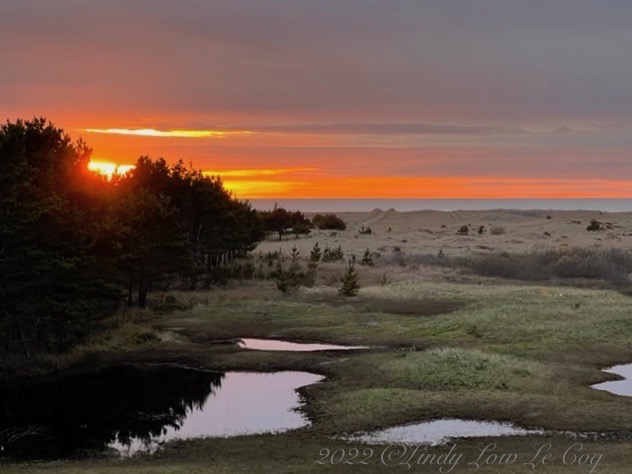
Sunrise on Long Beach is often dramatic. The one above left was a favorite when I posted it in the Diagonals challenge #228. On the right above is the best rainbow shot of 2022, though I see them often at the beach, I rarely see this kind of stretch!
Not sure what this sea critter is, however it is the same consistency as moon jelly. The movement in the top swirls and light reflections in the sea-bubbles stopped me in my tracks. Maybe Steve Morey can help id this one?
My spring gardens in Vancouver always chase away the winter blues. What a surprise to have an early April snowstorm and a chance to get some unusual photos!
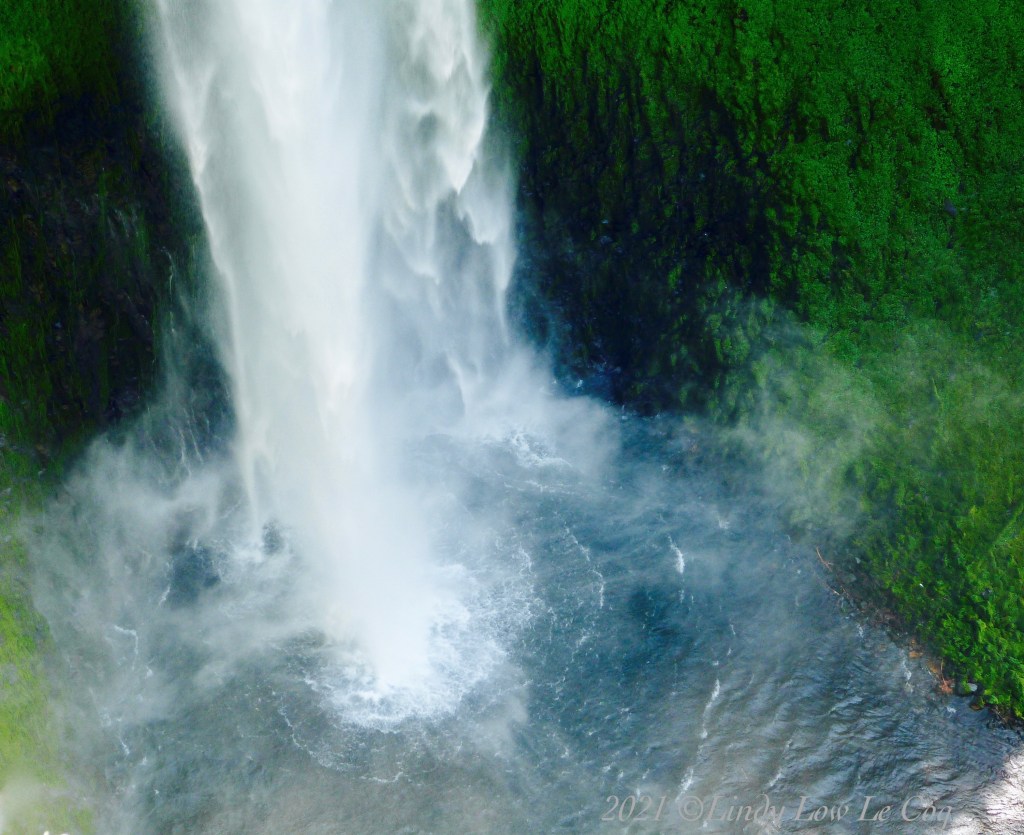
Salt Creek Falls (Willamette Pass Oregon) offers many lovely photo ops. This one is my favorite of 2022 because I was able to get the falls top to bottom, and the lay of the land as the creek flows down the mountain. Fog in the background adds a soft finish to this shot.
In mid-February we adopted Daisy and Max, 6 year old sister and brother beagles. Almost a year later, they have settled into life with their forever family. Both have adapted to our expectations, just as we have learned to respect their individual characteristics. Daisy is always on the hunt; sniffing, baying, climbing trees and looking for escape routes. Max is a big lover boy. He likes to pick up things and bring them to me, sometimes as bribes, mostly to get my attention!
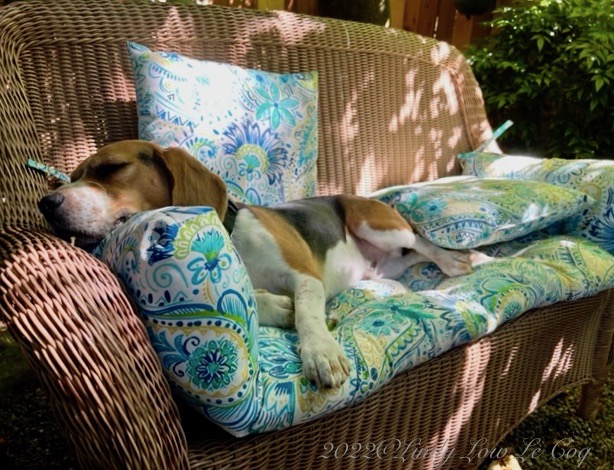
Max quickly established himself as the lounge lizard of the two!
Though I shared this shot in my end of 2022 post, it has to be my favorite action photo of the year! After chasing a squirrel right up this tree, Daisy slid down the tree trunk using her claws to stay on it until about four feet from the bottom, where she fell onto the ground and took off after more squirrels!
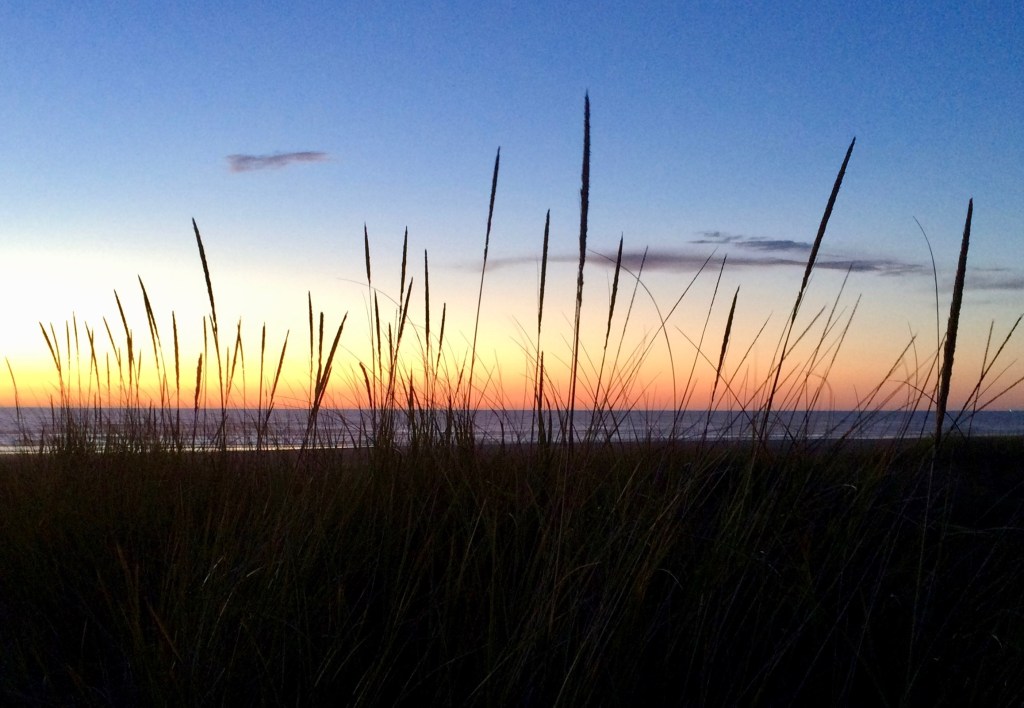
I’ll close with our sun on it’s way to disappear beyond the Pacific Ocean horizon. I never tire of watching sunsets. They inspire awe and hope in me, so you can look forward to seeing more sunsets in my 2023 Lens-Artists Challenge posts!
On your walk with life, please honor our earth, encourage dignity and share kindness. 🐾
As I look through the photos I’ve taken in 2022, I realize there aren’t as many as in years past. Blame it on the dogs! They didn’t eat my homework, however they have kept my hands pretty busy when we’re walking 🐾. My iPhone 13pro has been my workhorse, though I did get out for a couple shoots with the Panasonic.
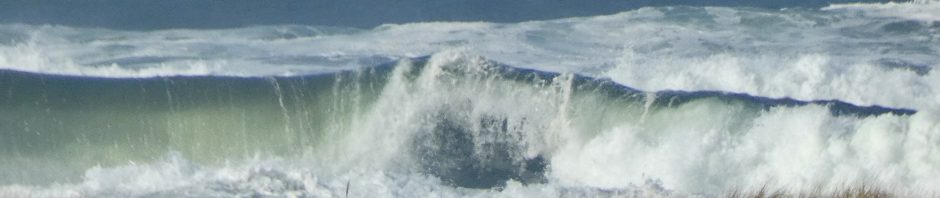
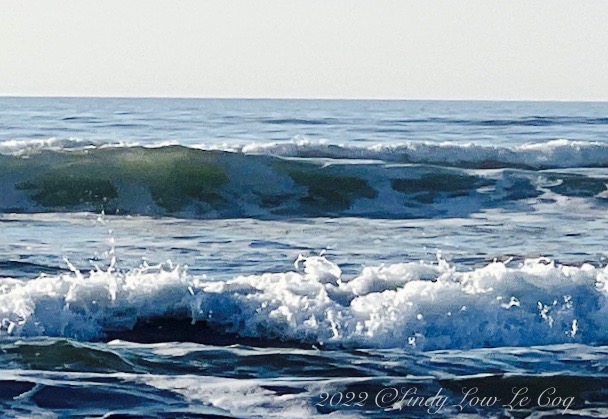
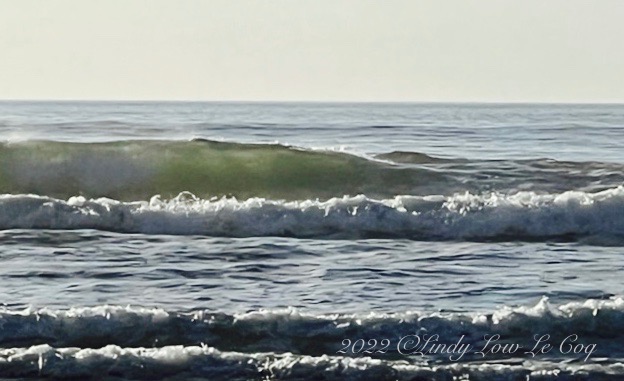
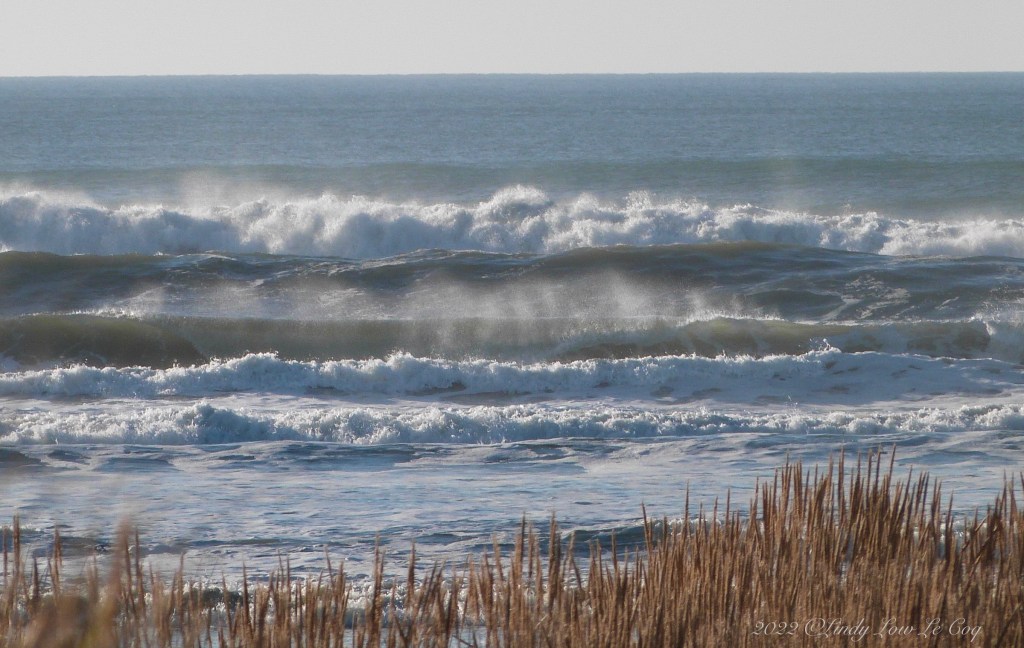
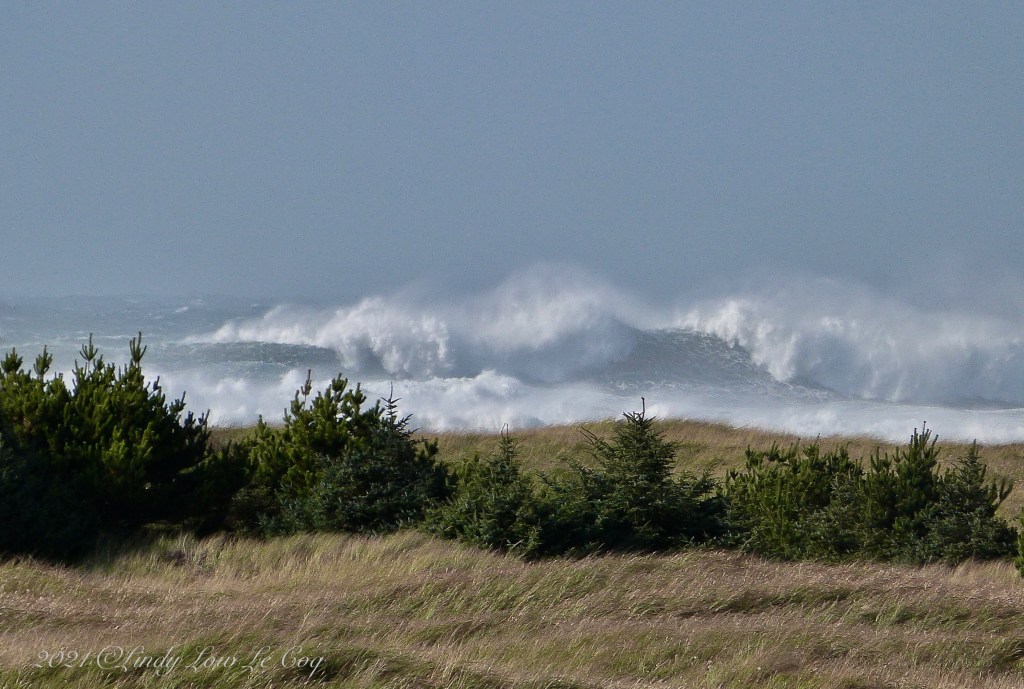
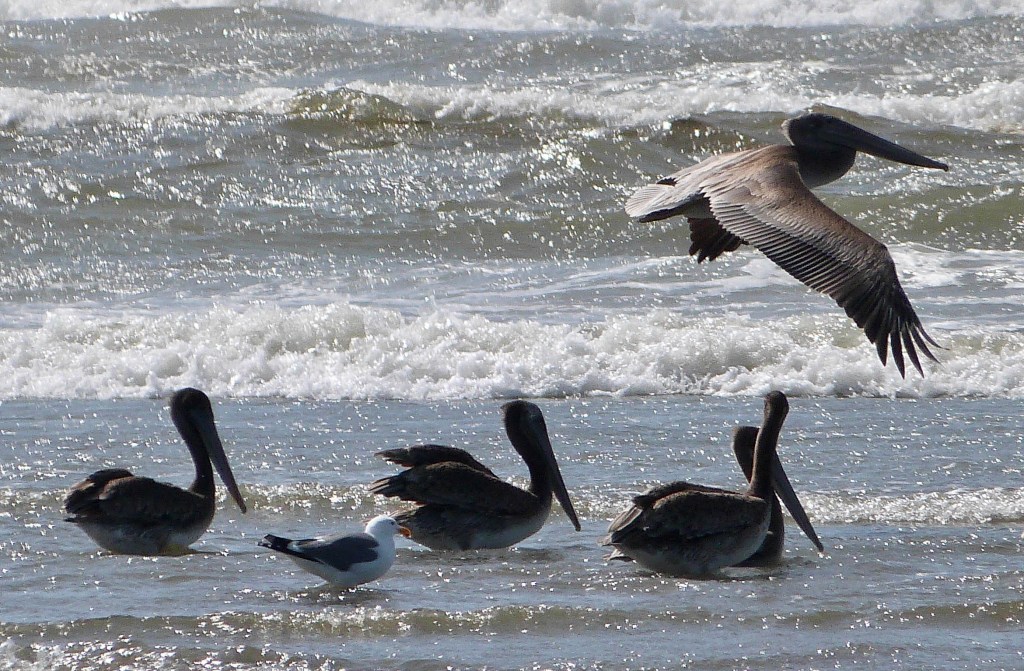
Pacific Ocean wave action is always a joy to behold. Above are three shots that capture both the force and power of the waves, and the play of light through and on the water.
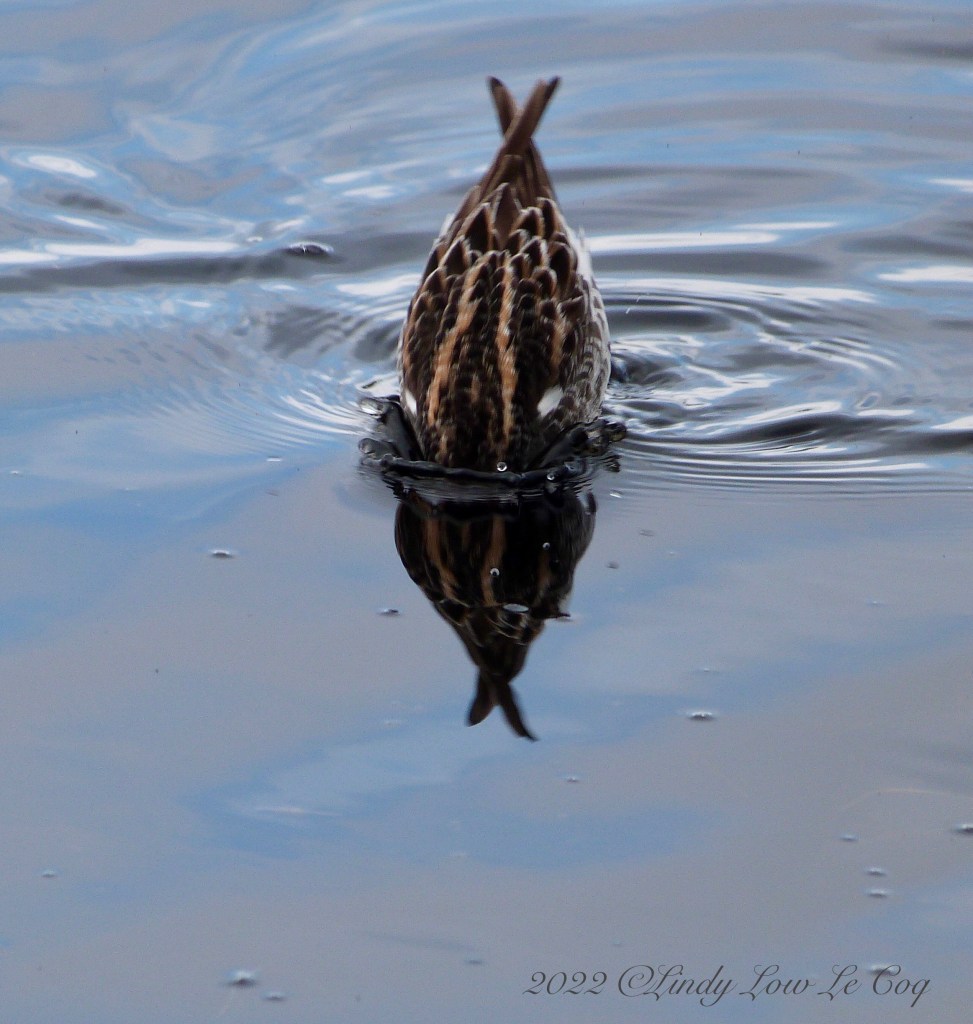
Above a beautiful Steller’s Jay visiting my deck seed-feeder. These are resident birds which I enjoy seeing year-round. Below, a cheeky peek at a Red-necked Phalarope as is dips into the marsh pond at the Breakers for breakfast!
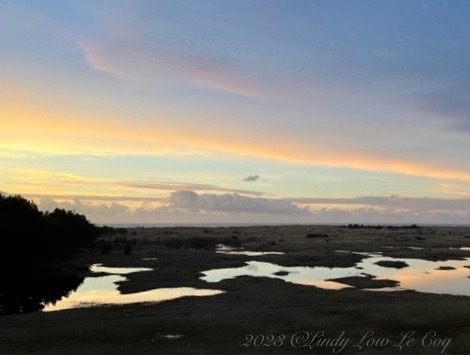
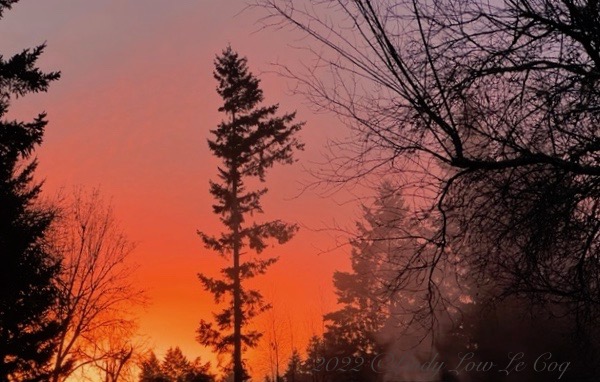
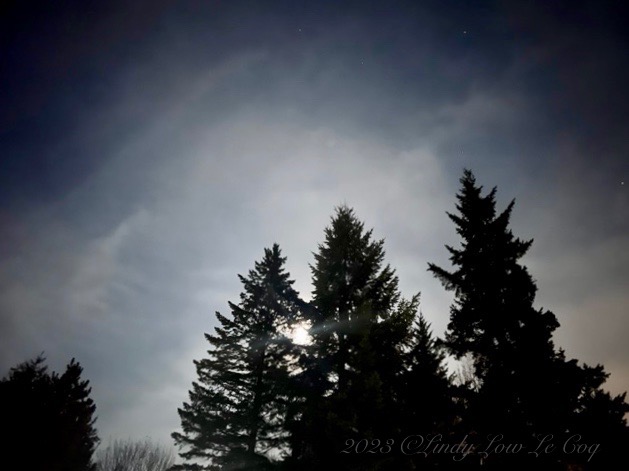
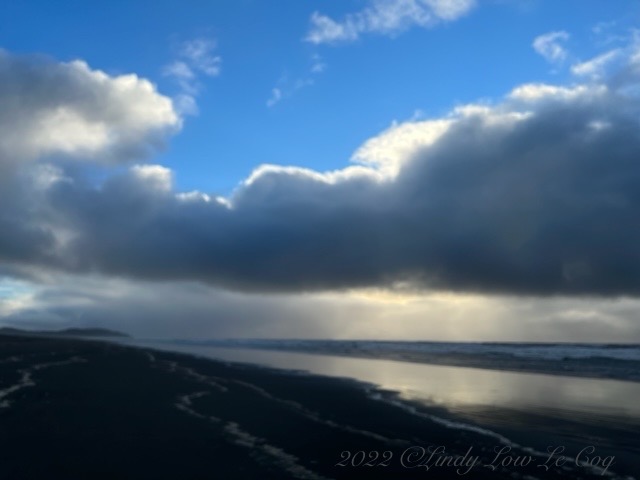
Sunrise, sunset and moody clouds.
Just in case you didn’t see this posted on Wordless Wednesday, the prize photo of 2022 is Daisy in the tree after a squirrel, with stalwart brother Max watching from solid ground!
Thank you to Tina for an inviting end of the year challenge. I remember when WordPress stopped posting the weekly challenge and Tina, Patti, Amy and Anne-Christine stepped up to fill the void. Thank you all, and I look forward to another year with new hosts and guests to keep us on our toes.
Cheers to the New Year! Please remember to honor our earth, be kind and stay safe.🐾
Here’s to Anne-Christine for inviting us to select photos of “perfect” patterns, with the understanding that perfect is always in the eye of the beholder! Here are some patterns in nature that I enjoy.
I’ll start with another in my series of Dune Runes. Above Alloniscus has woven multiple trails forming a net around the jewels of Yellow Sand Verbena (Abronia latifolia). With a bit of wind or a wash of wave, the pattern will vanish.
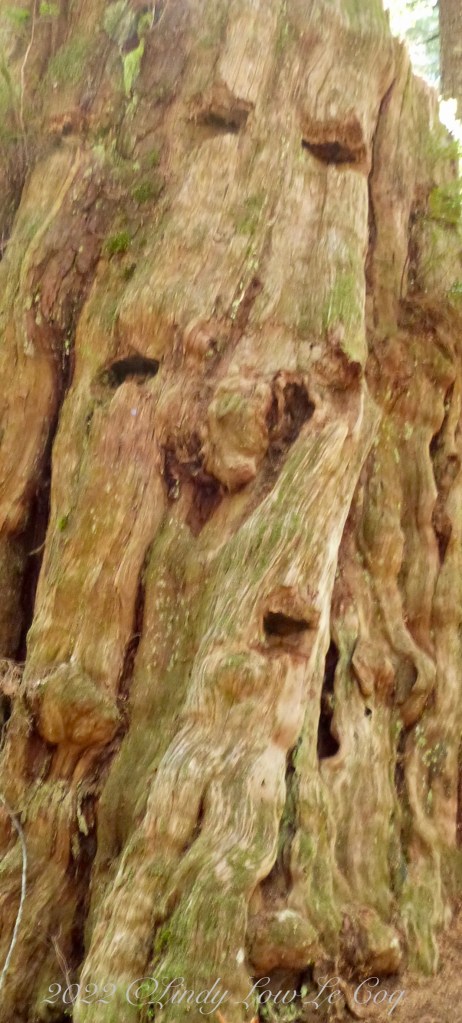
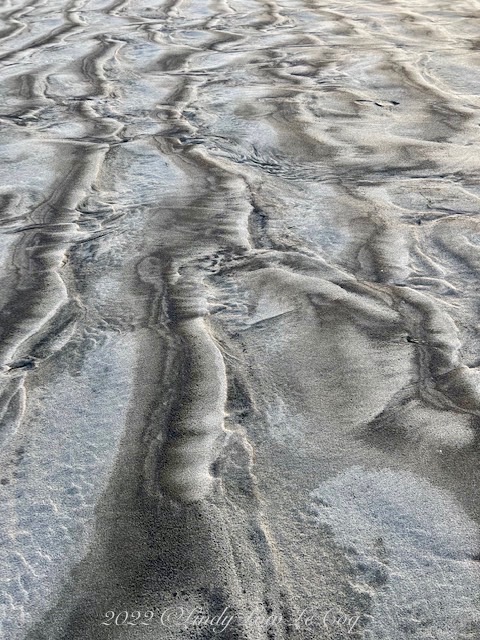
The deeply weathered wood on this aged cedar stump spoke volumes to me. Gnarled and bumpy, yet smooth and worn it has incredible character. On the right is a recent photo of wave action on Long Beach after a stormy high tide. Often the wave pattern left in the sand is rippled and smooth, this one stood out to me for it’s deeply carved furrows.
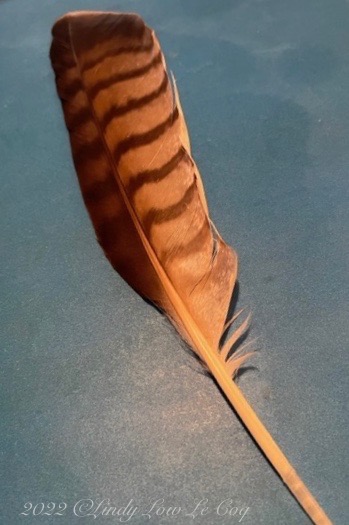
Patterns and colors on birds are part of the art of identifying them. Whether simple or intricate, bird feathers have always fascinated me. This one, I believe is a hawk wing-feather. I love its wide wavy motion on one side of the quill, that is echoed on the other side.
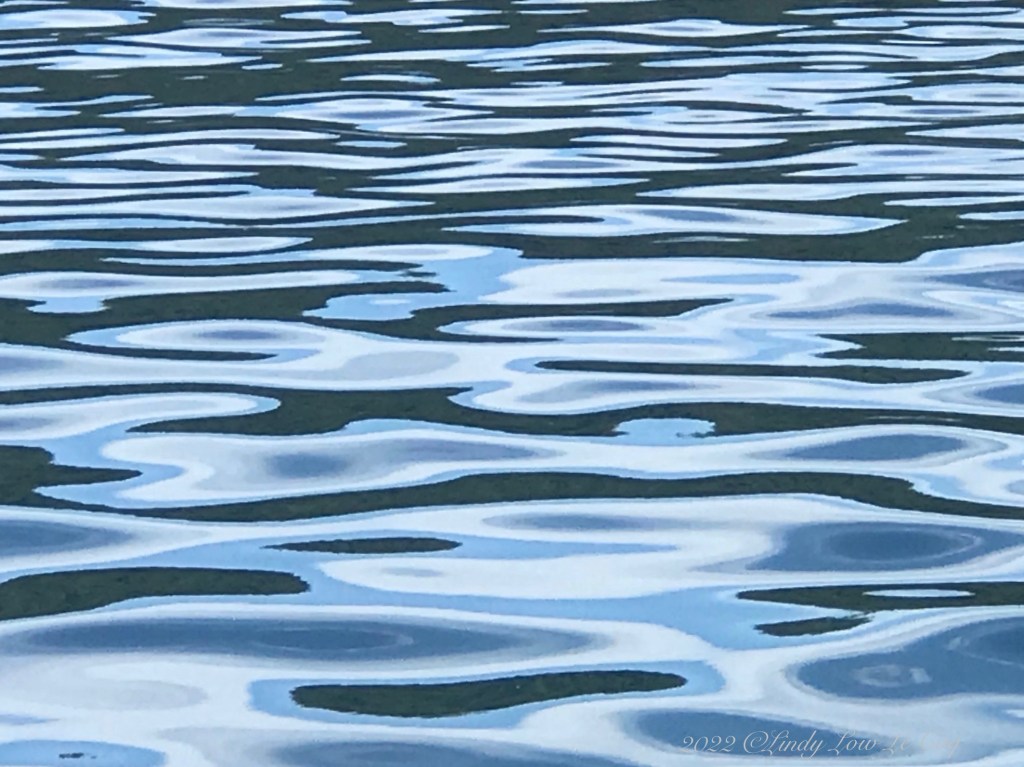
Above, the reflection of a cloud dappled sky on the rippling surface of Odell Lake mesmerized me as I rocked away in the boat. The patterns were always changing yet remained perfect in the moment.
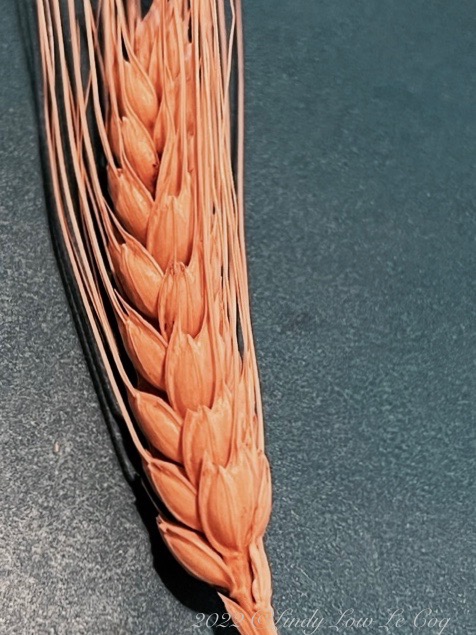
I’ll conclude with photos of mature seed-heads or spikes of the wheat plant, with its lovely braided pattern. In my teenage years I lived in the Palouse area of Washington State, a prominent wheat growing region. When autumn came around, harvesting combines would rumble through the hills day and night, stirring up dust to cause many a harvest moon. In their wake, the combines would leave row after row of chaff in undulating patterns upon the gently rolling hills.
In this joyous season of the year, please honor our earth, be kind and stay safe.🐾
A hearty thank you to Patti, who leads the challenge this week asking us to “explore diagonals as a way to add visual interest and depth to our photos, as well as a sense of action.” For this challenge I limited myself only to photos taken in 2022. Some I have featured before on Wordless Wednesday. Others are new. I invite you to visually jump into the scene and I hope you enjoy the views!
Standing on a point above Odell Lake, I wanted to focus on the beautiful color of the water. A deer trail, the angle of a tree trunk and tree limbs help draw our eye there.
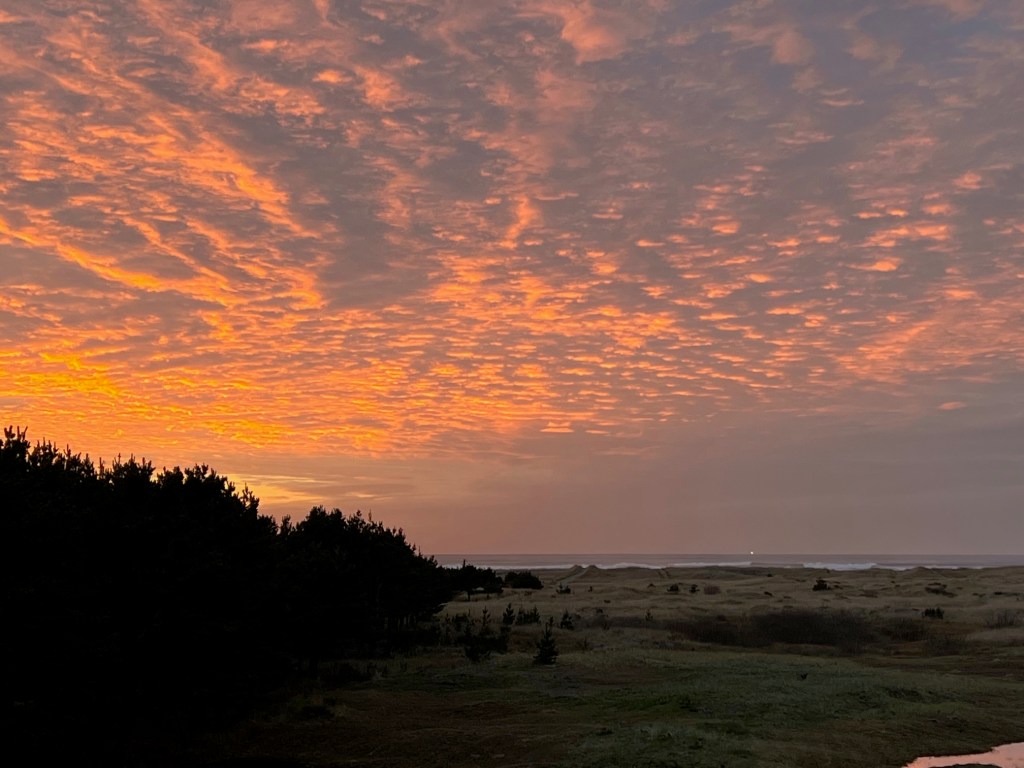
Our sun was rising in the east as bands of clouds hovered above the intersection of beach and dune berm, creating a dramatic glow.
An almost full moon lingers at almost sunrise on Odell Lake, Oregon. The lines of the dock (left) and the breakwater (right) point our attention toward the little bit of moonlight reflecting on the water.
It’s no secret, I love the natural intersection of light, critter prints, and sand motion that I call “Dune Runes.” This one has so many different diagonals criss-crossing one another, it demanded I snap a photo!
I’ll close with this shot of Max and Daisy taking me for a walk on a cloudy afternoon at Long Beach, WA. Once again the striking flow of the clouds creates a diagonal pull, leading us toward the end of the road.
Whether you go horizontal, vertical or diagonal, please honor our earth, be kind and stay safe.🐾
Walking With Eagles is a collection of original poems and photographs by Lindy Low Le Coq. A lifelong naturalist, amateur photographer and bird enthusiast, Lindy’s verse, composition and photographs open a window into the essence of her subjects. Her poems and photography reflect the rich natural wonders of the Pacific Northwest.
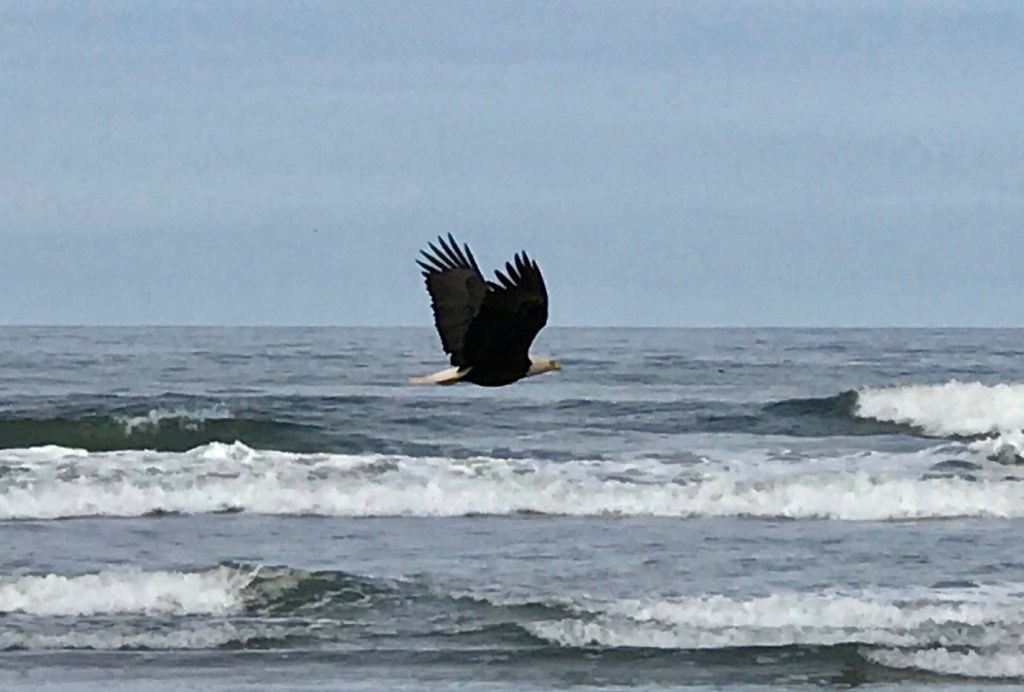
Bald Eagles mature over the course of five years. Walking With Eagles invites the reader to take a poetic and visual tour of this odyssey.
view ~ Walking With Eagles ~ in top menu bar for a preview, though the folio is much nicer!