



As we enter the holiday season, please continue to be kind and stay safe.🐾


As we enter the holiday season, please continue to be kind and stay safe.🐾


As we enter the holiday season, please continue to be kind and stay safe.🐾


As we enter the holiday season, please continue to be kind and stay safe.🐾
What does it mean to “follow your bliss”? We all make choices in our approach to life and art – to follow your bliss is to pursue that which provides you happiness and joy. It is quite likely you have more than one focus that gives you deep pleasure. For this week’s challenge, in words and photographs, show us your sense of wonder and excitement. Whether it be one activity that is your passion, or many different interests you follow, this is a wide-open opportunity to showcase how you “follow your bliss.”

Whether scanning the sky or focusing on a row of tiny mushrooms, when I’m engaged and learning ~ that’s my idea of bliss!

Since November 13th was the start of the 2021-2022 Project Feederwatch season, and marks the beginning of my 14th year as a Cornell Lab of Ornithology Citizen Scientist, today I’ll showcase my passion for birds. What fun it continues to be for me to observe these amazing creatures, to learn their names and what they are up to in any given season of the year.

The state bird of Washington, American Goldfinches are always a delight to behold in their bright spring feathers. This guy, perched atop a Coastal Pine, is pouring out a love song to attract a mate!

“A widespread shorebird (occuring on six continents), Black-bellied Plovers breed at the very top of the world, farther north than other species.” As with many other birds their feathering is muted when they are not into the breeding season, so I was excited to spot this one in full feather!

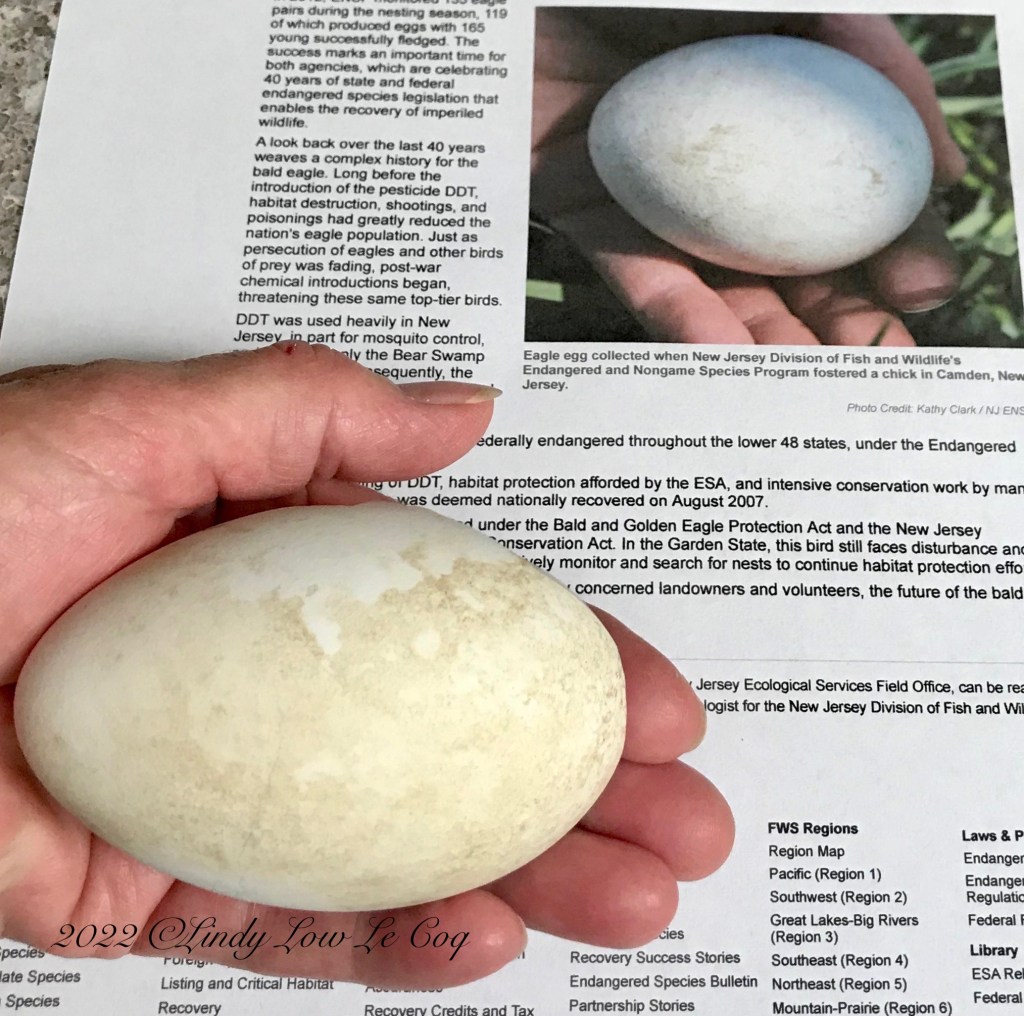
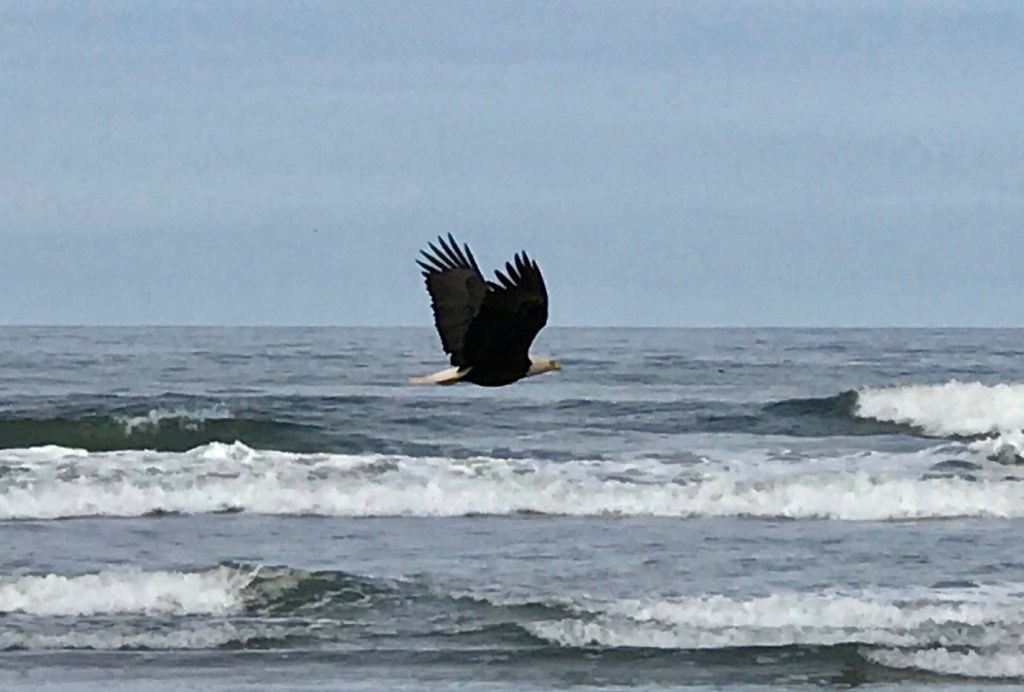
The journey from cracking the egg to full-breeding maturity is a five year process for Bald Eagles. When everything shut down in March – May 2020, I was able to observe many Bald Eagles at fairly close range on the Long Beach Peninsula. What a treat to get excellent portraits and then study the characteristics of each phase in their development. Subsequently, I created a folio of poems and photos, Walking With Eagles.

Rarely do I see a Sanderling standing and alone, as they more typically gather in groups and chase the ebbing tide in and out probing for prey in the wet sand. “One of the world’s most widespread shorebirds, Sanderling nest only in the High Arctic. In fall and winter you can find them on nearly all temperate and tropical sandy beaches throughout the world. During migration, Semipalmated Plovers can show up almost anywhere across North America. The dark back and a single black band across their breast, along with their run-and-stop foraging style helps to pick them out from other small shorebirds.”

What a delight to look up to the swaying branches of this fir tree and see the bright feathers of a breeding male Purple Finch! “Although these chunky, big-beaked finches do breed in northern North America and the West Coast, they’re often irregular winter visitors to our feeders. Backyard sunflower seed feeders are where you might find Purple Finches, if you live within their winter range.”

Short-billed? Well, only compared to their relatives the Long-billed Dowitcher! “Widespread shorebirds, they are relatively easy to find during migration and winter in coastal areas. They probe for food by rhythmically inserting their bill straight up and down (like a sewing machine needle) in mudflats, tidal wetlands, or shallow freshwater sloughs.”

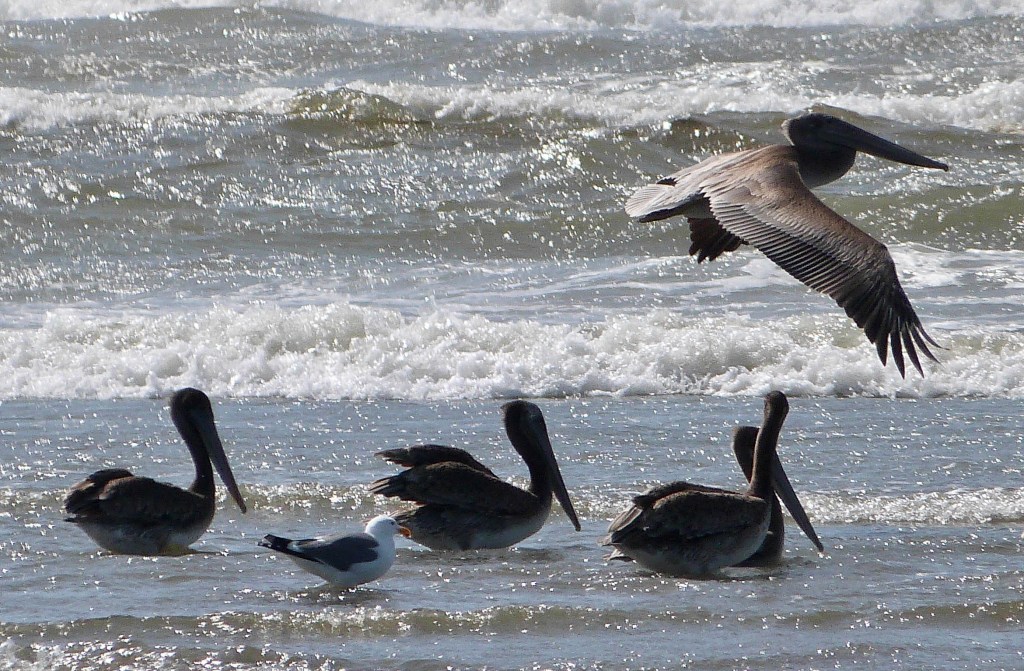
I just never know what I’ll find when I crest the berm and look out across the vast shoreline of Long Beach. On this lovely June day in 2019, a flock of Brown Pelicans were resting and refreshing in the surf. “Brown Pelicans live year-round in estuaries and coastal marine habitats along both the east and west coasts. On the west coast they breed between southern California and southern Ecuador—often wandering farther north after breeding as far as British Columbia.”
All quotes are from the Cornell Lab of Ornithology website – https://www.allaboutbirds
Follow Your Bliss, Joseph Campbell
It is truly an honor to be your guest host this week joinimg Amy, Ann-Christine, Patti and Tina in providing opportunities for visual expression. We hope you’ll join us in sharing how you follow YOUR bliss. Be sure to include a link to my post and to use the Lens-Artists tag so we can all find you in the Reader.
Next week, Christine will lead the challenge, so we invite you to stop by her Leya blog on Saturday, November 27, at noon to join us.


As we enter the holiday season, please continue to be kind and stay safe.🐾
In July, 1994 my husband and I flew to France where we were treated to a three-week excursion with his cousin, Catherine, her husband Jean François, and their daughter Adeline. That was 27 years ago, and my camera was a small, point and shoot model, so all the photographs of that journey are less than spectacular! However, the trip itself, the places we visited, and family members who received us were amazing. For this week’s challenge from Tina, I offer these humble photos of some truly wonderful architecture.

Jean-François’ and Catherine’s three story home in Châteaugiron was built of stone in the middle ages. Walls are about two feet thick as you can see in this photo looking out the window of our third floor bedroom, and below of the entrance to their home and Jean-François’ medical practice.

Creighton’s grandfather. Jean-Pierre Le Coq had studied for the priesthood, then left France for the USA. He never told his siblings that he had married and fathered four children, who in turn had children. It was after his death, when Catherine was sent by the family to recover some letters between Jean-Pierre and George Sand, that she discovered there was a whole other branch of the family tree all over the United States.


This little church in Saint-Brieuc is likely where Jean-Pierre studied for the priesthood.

Saint-Malo, where Catherine’s parents resided has a rich history. A walled town on the coast of Brittany, it has the highest tides in Europe, with water that can rise 13m (14+ yards) over the course of six hours. When the water goes out, it reveals several kilometres of ocean floor, and when it comes back, it comes back fast. Because the Germans had built bunkers into the structures, the town was three-fourths destroyed during World War II, but it has been rebuilt.

What an incredible structure in a fascinating landscape this is. Yes, it’s a tourist site, yet such history and well worth the visit.

From Brittany/Normandy we were taken on a tour to the south of France, visiting family and towns along the way. There are many châteaux on the tour-guide lists. We visited two and I liked this one best.

Château de Chenonceau spans the River Cher, near the small village of Chenonceaux, Indre-et-Loire, Centre-Val de Loire. It is one of the best-known châteaux of the Loire Valley.

I’ll finish with one of the most unique places we visited. Creighton’s uncle Guy, was reconstructing this home in Albepierre, to be a summer getaway. Built into the earth in the middle ages, with 3-4 foot thick walls, the remodel was quite an undertaking!
As we enter the holiday season, please continue to be kind and stay safe.🐾
Trout fishing from boats on beautiful wild northwest lakes is a team sport in my family. We all have a stake in the outcome, so we work together to find where fish are biting, lure them to bite our hook, land, them in the boat, then clean and preserve our catch.

My sister Diana, and brother-in-law Les, provide the gear; accommodating boat, motors, fishing poles, down-riggers, lures – the works. They spend much of the summer in their RV at a nearby campground and host other family members as we trek to the mountain for fresh water fishing and outdoor fun.

By the time I arrive for a week-long stay in July or August, Diana and Les have located where the fish are biting, though fish being quite fickle, there is no guarantee we will find or catch any! When someone gets a strike and reels a fish up to the boat, someone else nets it; a job as important as keeping the line taut without ripping the hook out of the fish’s jaw.


Marie insists on kissing her fish. An old tradition, this ritual centers around respect for the fish, and the idea that the kiss will bring you luck. Marie and I had great fun with Les and Diana last July, and I must say her instinct is correct as I believe she was the champion Mac fisher for the week!

Kokanee were not biting when I visited this past summer, however as you can see from the above photo, there have been years when we came off the water with our limits. Cleaning stations (and appropriate tools) make the job of gutting and prepping the fish a reasonable chore, one we all participate in.


Marie and Diana place clean, slabs of brined Mac on smoking racks. Les inserts the racks into the smoker as Marie and Diana supervise. After the smoking process, we either vacuum pack the fish for storage in fridge or freezer, or can it in jars for shelf storage. I love opening a jar of fresh or smoked canned fish and making a meal of it!


At the end of our day, we sit around a fire with our beverages of choice, and then have a delicious home cooked dinner. Diana is an excellent chef, and I am a willing dishwasher! By dark, I am tuckered-out and since we arise early (before sunup) I am off to shower and get my beauty rest by 9:00 pm.

As we enter the holiday season, please be kind and stay safe.🐾
Thank you Amy, for this opportunity to highlight a favorite family activity. Lots of good memories and laughs accompanied the making of this composition!


As seasons change, and we anticipate the holiday season, please remember to be kind and stay safe.🐾