
Recently I enjoyed a couple afternoon hours with Al Young at the Portland Roadster Show. Al has been a friend since our undergraduate years at the University of Washington. When Creighton and I met, both he and Al resided in The French House of McMahon Hall. Creighton was Al’s tutor for French. I remember one time hearing Al appealing to Creighton: “Man, I need your help here – please!!! I just have to pass this one class and I’ll be done with foreign language!” What a fun, thoughtful and insightful person he was then and continues to be. His story is compelling and one I encourage you to read (see link below).
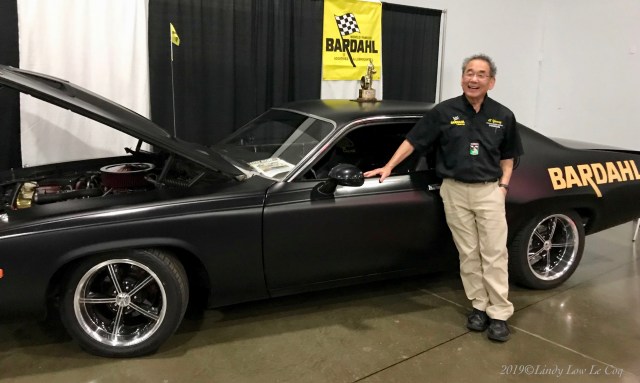
Al with his 1973 Plymouth Roadrunner
Since the first 8,000 mile cross-country USA road-trip with his wife Vicki in 2011, they have toured Europe three times, attending the Power Big Meet, where he was awarded first-place trophy for longest distance traveled at The Power Big Meet in Vasteras, Sweden, 2014.


“Over decades of competition, Al raced his Challenger at speeds over 150 miles per hour, winning everything from state championships to thousands of dollars as a three-time world champion of Hot Rod Racing. His titles include the American Hot Rod Association World Champion, the National Hot Rod Association Division Champion, and American Hot Rod Association World Finals Champion.”

“Al Young retired from competitive racing in 2003 and donated his racecar to the Museum of History and Industry in Seattle. The lime-green car presides over the museum lobby and displays the decals of Al’s many supporters, a dense pattern of stickers reminiscent of the colorful patchwork of paint on Al’s first Mercury. Al paid $1,100 for his Challenger, in 1975. Today, it is worth $600,000.”
https://www.inkshares.com/books/the-challenger-the-al-young-story/book_segments/chapter-1-68
On our last visit to Long Beach, on a cold morning the frosty edges of wave-rippled sand intrigued me. In a way they looked like sparkling feathers, so I took several photos to try to capture the sensation. Here are three with nice shadows for this week’s fun foto challenge!


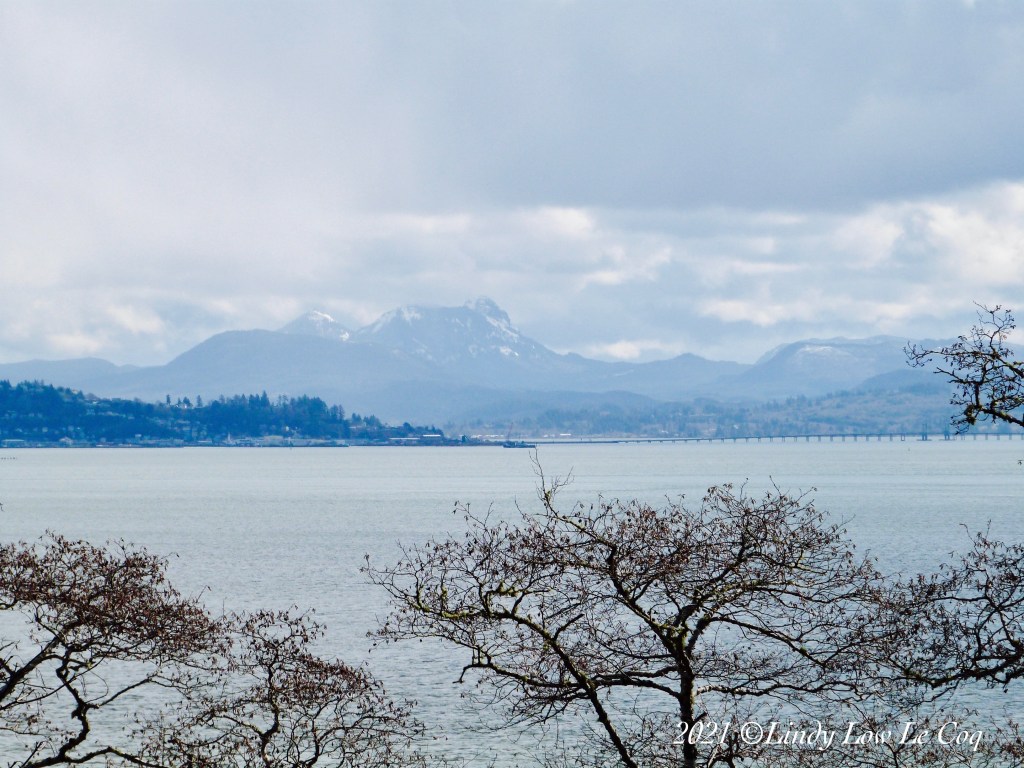
The mouth of the Columbia River, as it flows into the Pacific Ocean, has been claimed to be discovered ‘for the first time’ by many explorers.


Jello walked me around – her nose to the ground – my camera in hand.
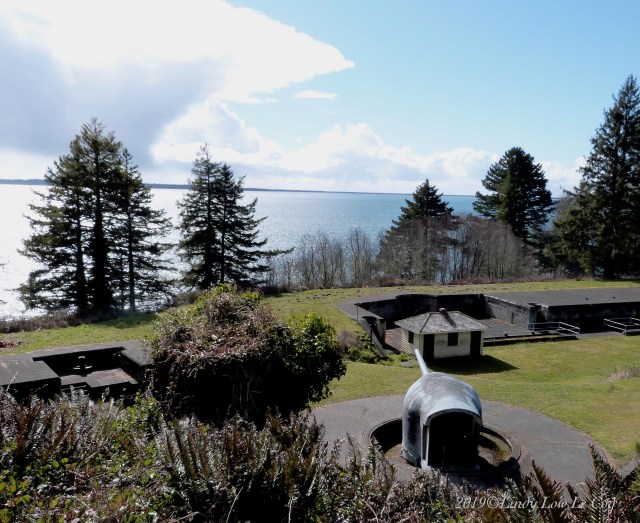
Battery 246 was intended to form a “triangle of fire” with similar batteries at Fort Canby in Ilwaco, and Fort Stevens near Astoria. After the end of WWII, they were declared surplus. What once was high tech, is old tech – History!
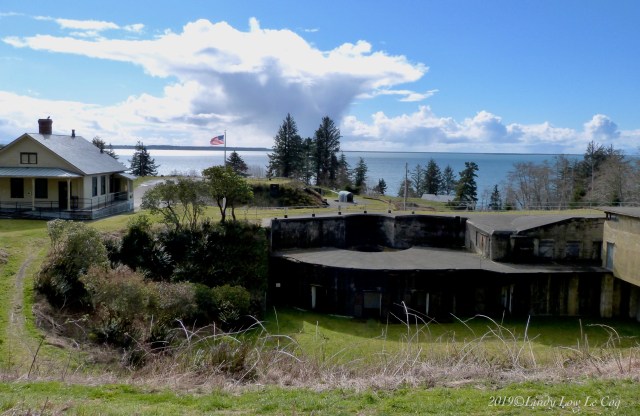
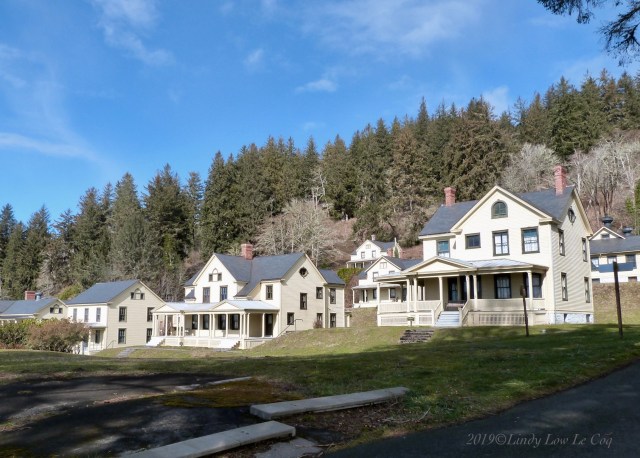
Wooden barracks, guest houses, and officer’s quarters are painted and tidy. Some buildings are available as vacation rentals too.
View of the Megler-Astoria bridge.

Thanks to Patti, for this opportunity to highlight more of the history and natural beauty of the Long Beach Peninsula, WA – USA
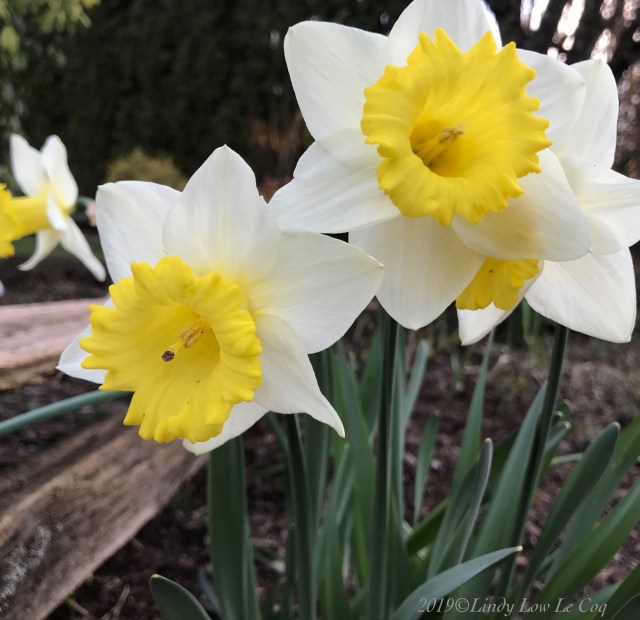
earth suspends mid-spin
daylight and darkness shake hands
equal on this day

dry leaves and seeds fly
green shoots push past winter’s grip
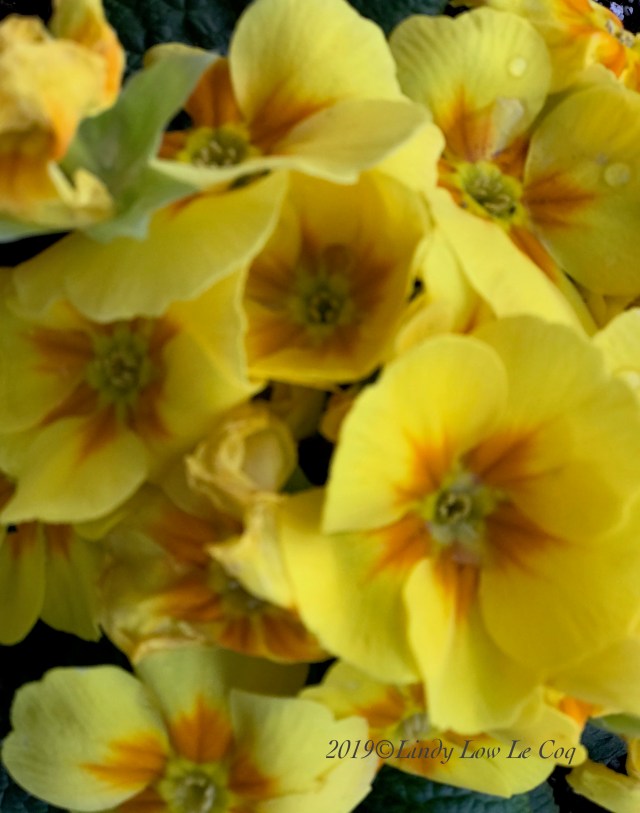
amber blossoms lift
Cheers!

Tina has challenged us to present a photographic sketch of a neighborhood. After considering a summary of major tourist destinations on the Long Beach peninsula (some of which I have featured in previous posts), I decided to keep it closer to my beaten path!


Traces of unseen life are everywhere! These appear to be the tracks of North American deer mice (Peromyscus manipulates) a nocturnal mammal that nests during the daylight hours in trees or burrows.

Humans hands have shaped this little nest. These sites often pop up along the beach only to be blown away by storms and later reconstructed in new forms.

A month ago, I would see two or three crows at a time, here and there. Looks like flocks are migrating in for the summer!
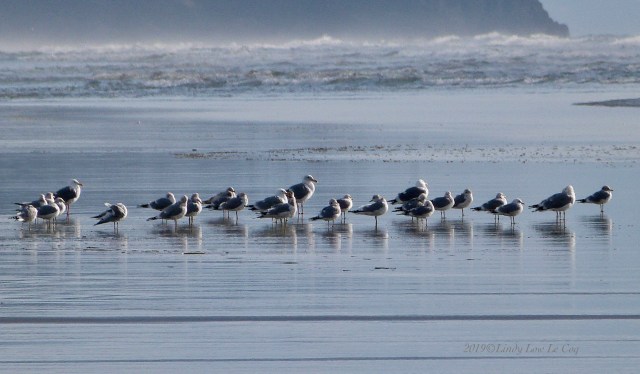
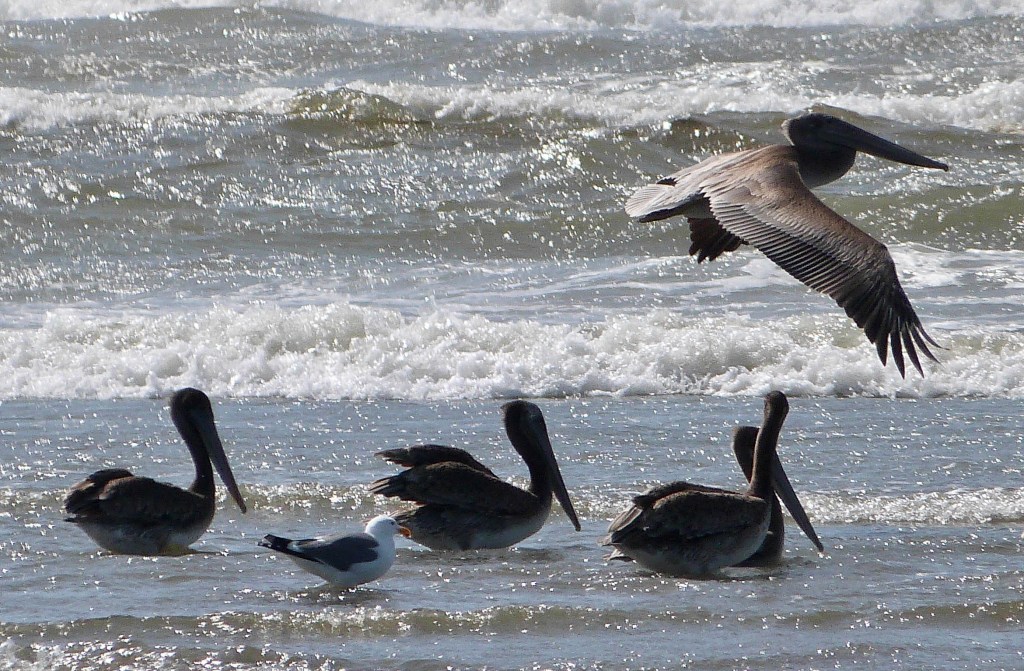
The same is true for this handsome group of Western Seagulls who greeted me one morning.
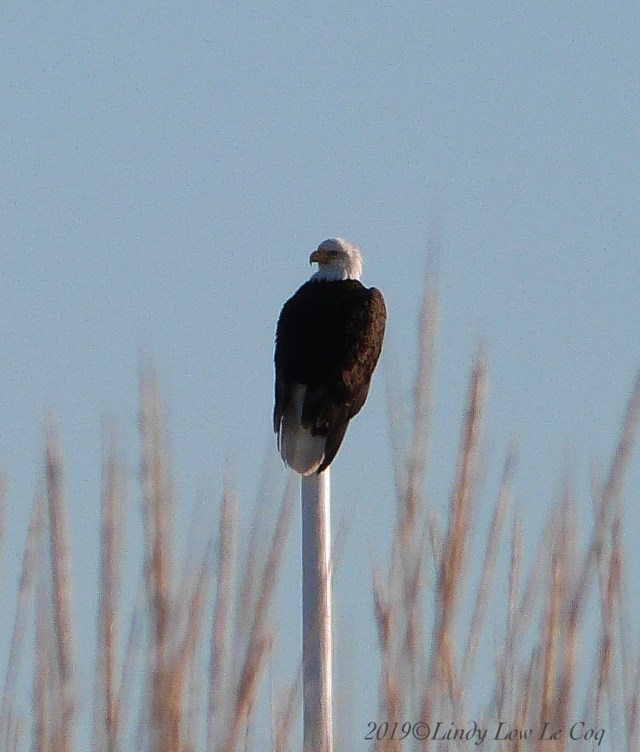
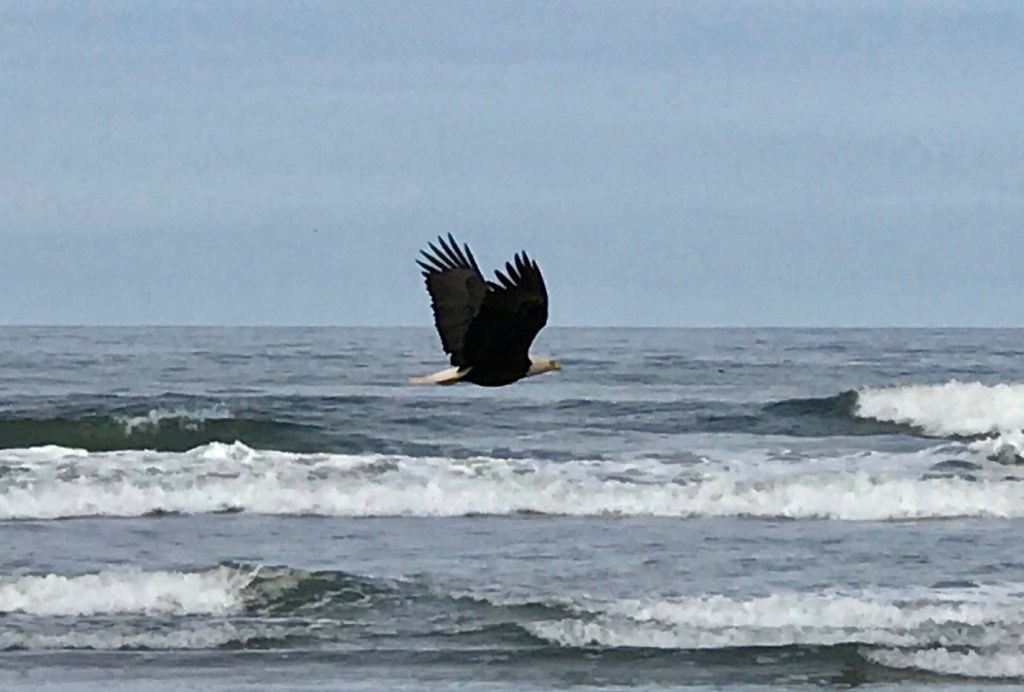
Though not every day, I did see Bald Eagles flying over the beach and this one perched at the edge of the dune berm.

On my last morning beach walk I was happy to see 20 +/- migrating Black-bellied Plover (the bigger one) with about 50 to 75 Spotted Sandpipers (the smaller one above) along with a few Snowy Plovers (below). In mating feather, the Black-bellied Plover lives up to its name!

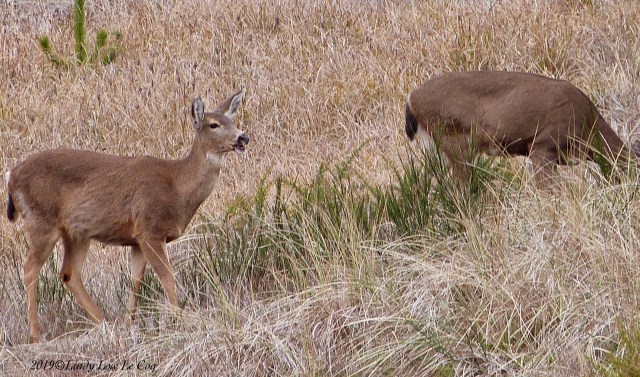
To finish off this visit to my beach neighborhood, two Columbia Black-tail Mule Deer grazed through the meadow in front of our condominium
Thank you to Lens-Artists for another fun challenge!
Throughout the Long Beach peninsula, there are buildings with murals depicting life as it was in the early 1900’s. Here are a few I was able take pictures of on a rainy afternoon this week!
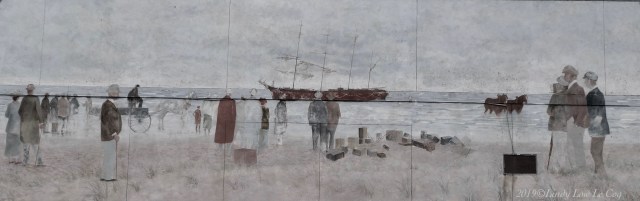


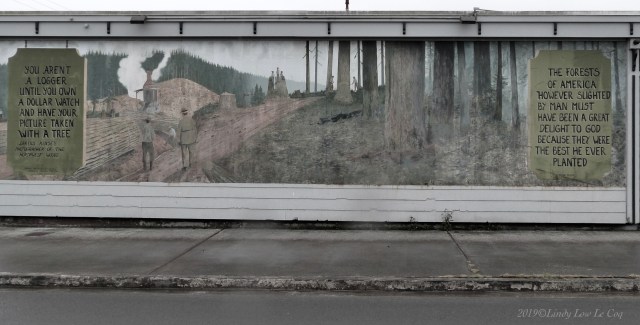

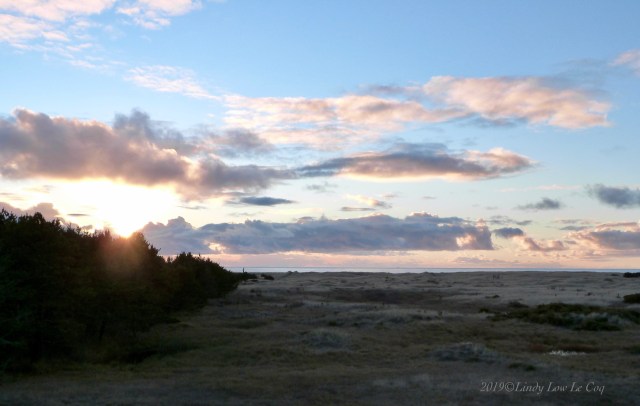
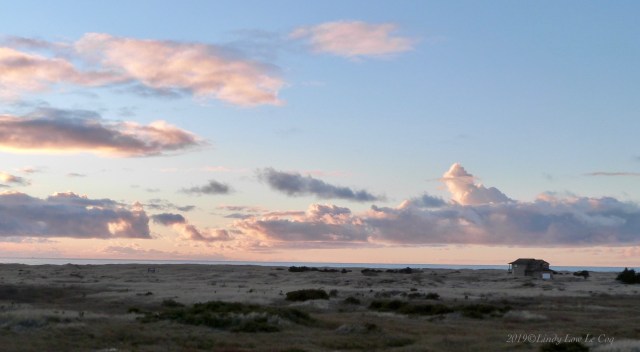
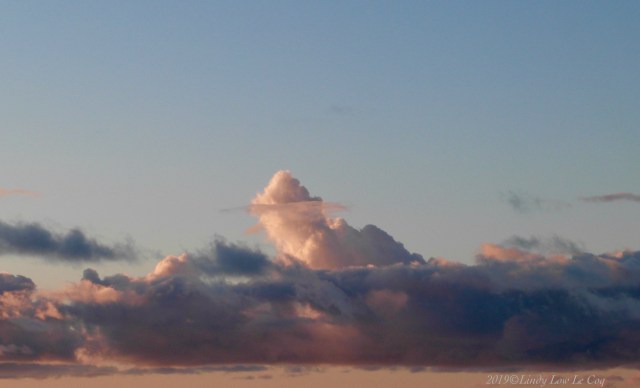
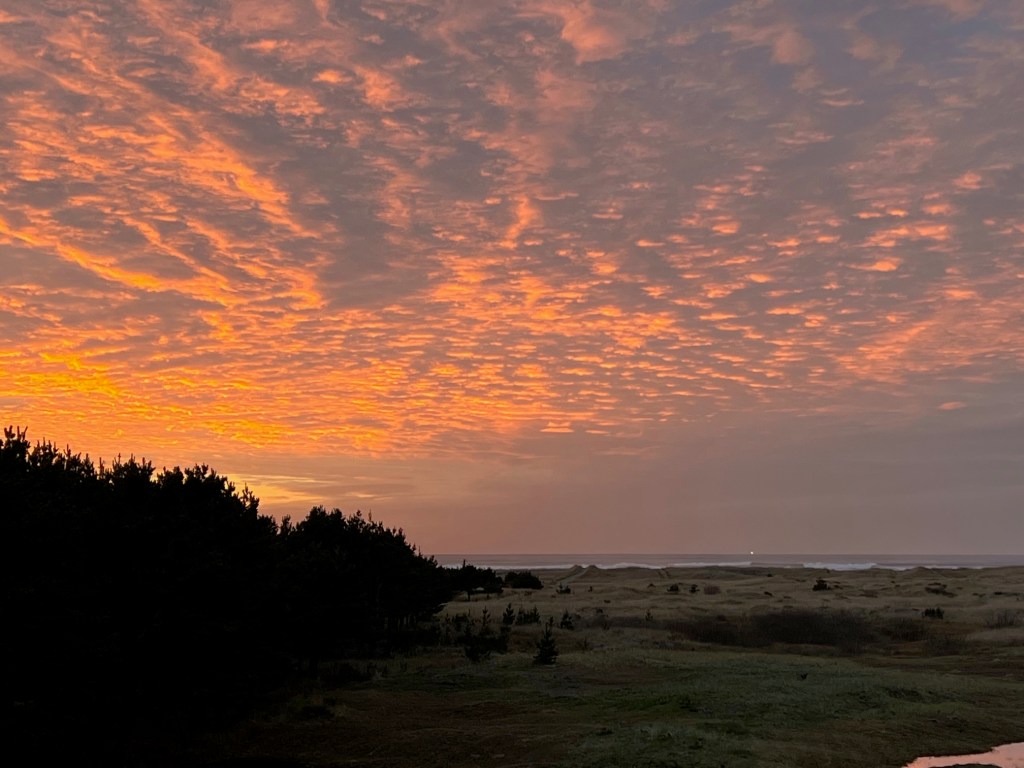
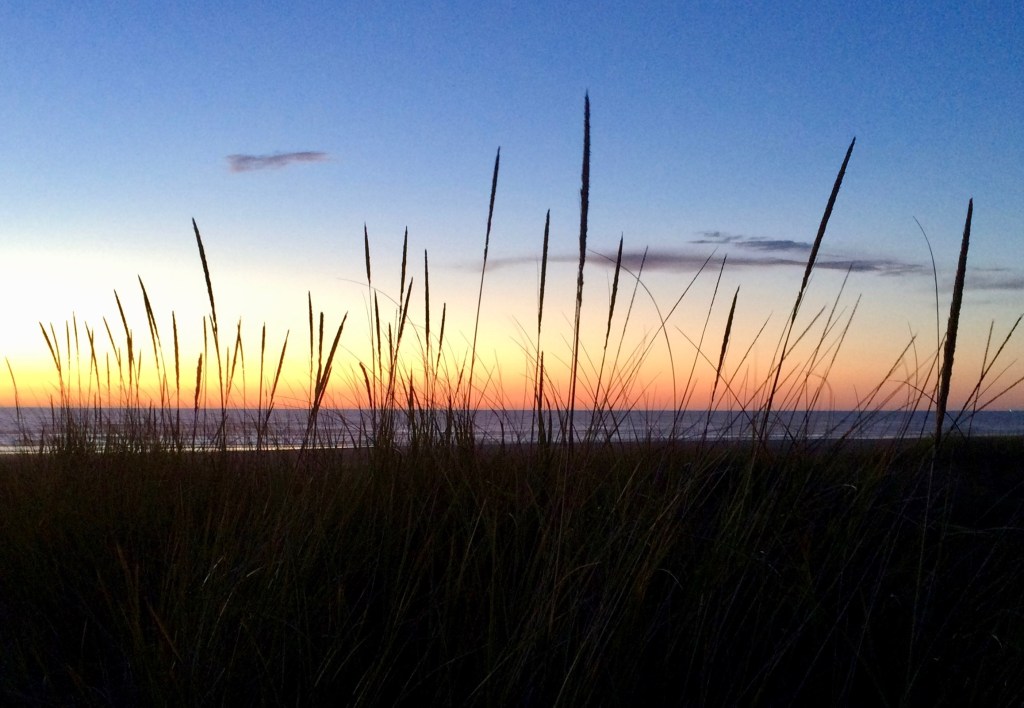
Almost sundown at Long Beach, WA – USA.
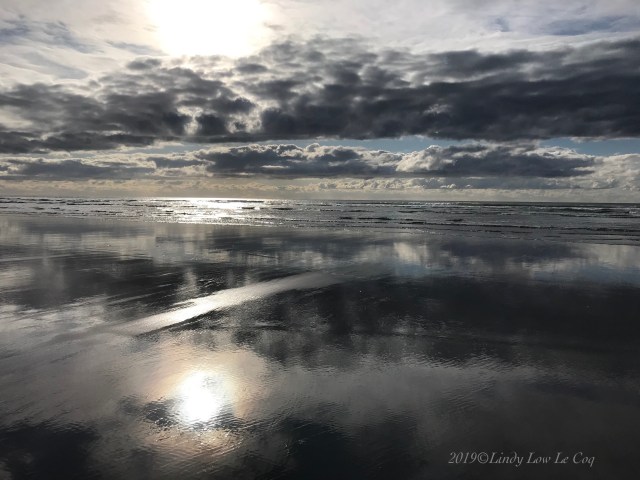
Light through window at The Sanctuary, Chinook, WA – USA.

Raindrops on Pussy Willows.

A little cheer to add to Cee’s Fun Foto Challenge this week with the subject Shiny.
Along with some schools and forts, pioneer churches are among the wooden structures that have been preserved in the Pacific Northwest. For Amy’s Lens-Artist challenge this week I’m featuring three church structures that extend along a 28 mile (45 km) stretch from the southern end of the Long Beach Peninsula to near the northern tip.


The town of McGowan, established in 1853, was a thriving community which was anchored by a cannery located on pilings in the Columbia River, just south of Fort Columbia. Though nothing remains of the cannery today, in 1904, Patrick J. McGowan built and paid for the church which is maintained in its original condition. It has no utilities, so kerosene lanterns are used to provide light for services which are held in summer and on other special occasions.


The Sanctuary building was originally a Methodist Church and parsonage. It is a beautiful building but needs some loving care and repair to be resurrected. More recently it was the site of the Sanctuary Restaurant and Antique store. It is located on the main street in the town of Chinook, WA and is for sale.


“The Oysterville Church was a gift to the community from founder, R.H. Espy, who donated the land and money for construction in 1892. Originally a Baptist ministry, in 1981 the Espy family arranged for its re-dedication as an ecumenical church and gifted the building and property to the Oysterville Restoration Foundation. It is now used by the community-at-large for weddings, funerals and an occasional Christmas or Easter service. For thirty years, weekly music vesper services have been held on Sunday afternoons through the summer months.” http://www.oysterville.org/church







 Lindy Low LeCoq