North Head Lighthouse – Ilwaco, WA – USA
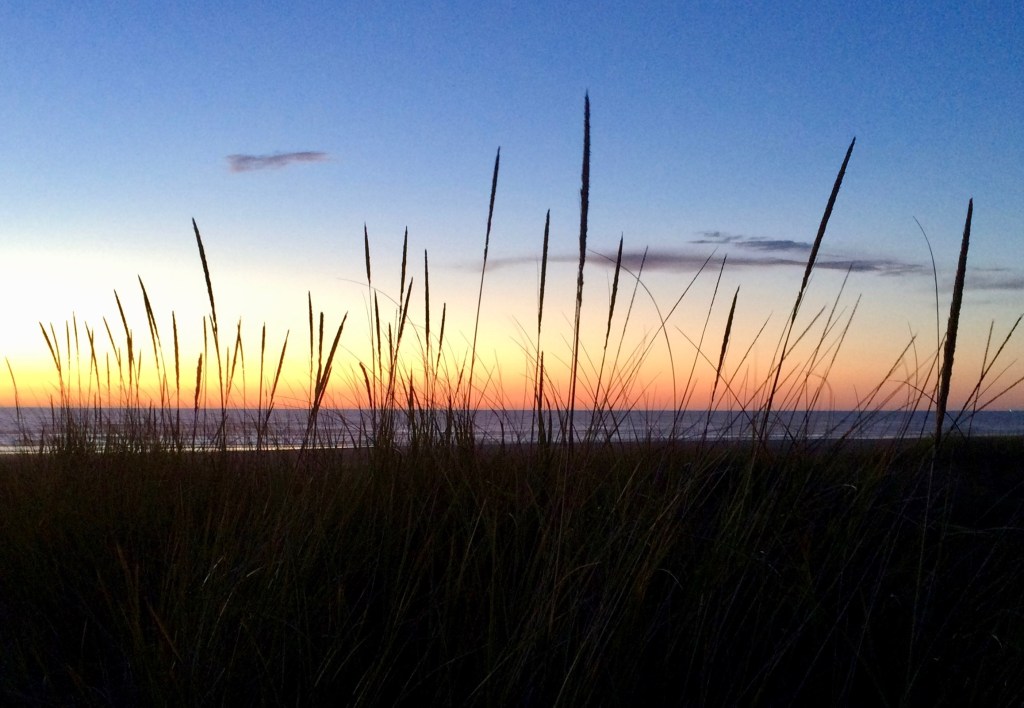
Dune runes always fascinate me – how the wind blowing at ground level moves bent stems of dune-grass creating natural sand drawings.

And, in the bright morning light there is the addition of lovely arched shadows!

On May 6, as Jello and I were on our walk, this parrot tulip in a neighbor’s yard stopped me in my tracks!

It brings to my mind the title of Gary Zukav’s book, The Dancing Wu Li Masters.
“…the Chinese term for physics is ‘Wu Li’, or “patterns of organic energy.” Zukav, among others, conceptualized ‘physics’ as the dance of the Wu Li Masters – teachers of physical essence.”
And what a perfect excuse to hear again a favorite song-poem by Joni Mitchell.

Weather and tide shape the landscape of every walk I take along the beach. Birds, folks, critters and flotsam observed along the way add context and generate questions about the ever-changing scene.

“By-the-wind sailors” Velella velella (see description below)
Over the past year my understanding and appreciation of migratory and resident birds that spend part of their life-cycle here has steadily grown.

Northern Harrier
Though sometimes not in crisp focus due to movement and distance, these photos are a small gallery of some of the birds I’ve observed this past week at Long Beach.

Breeding Western Gull


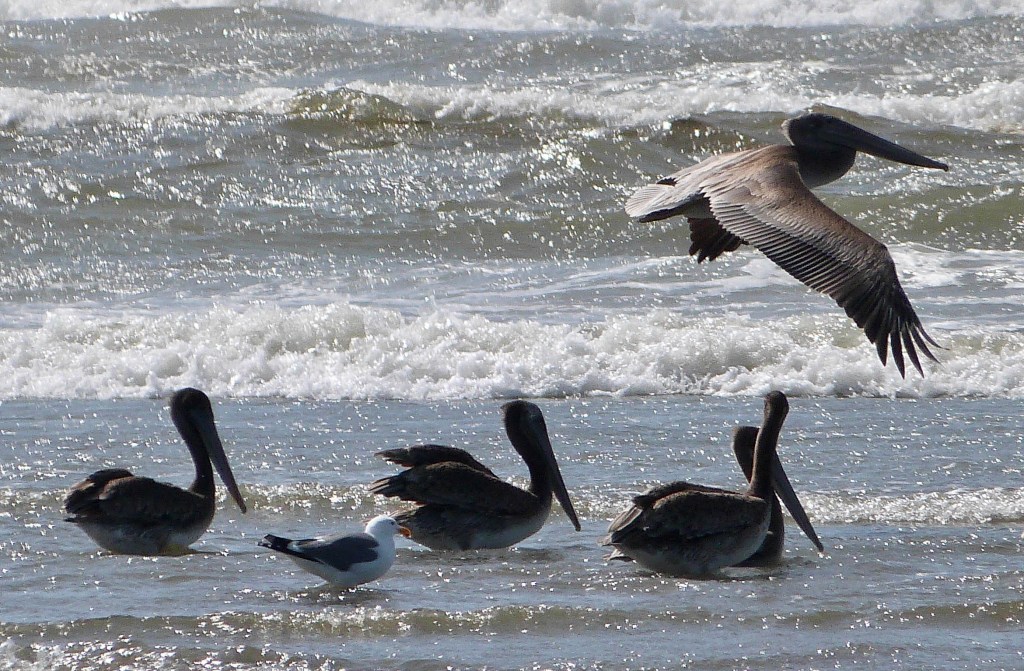
Immature Brown Pelicans

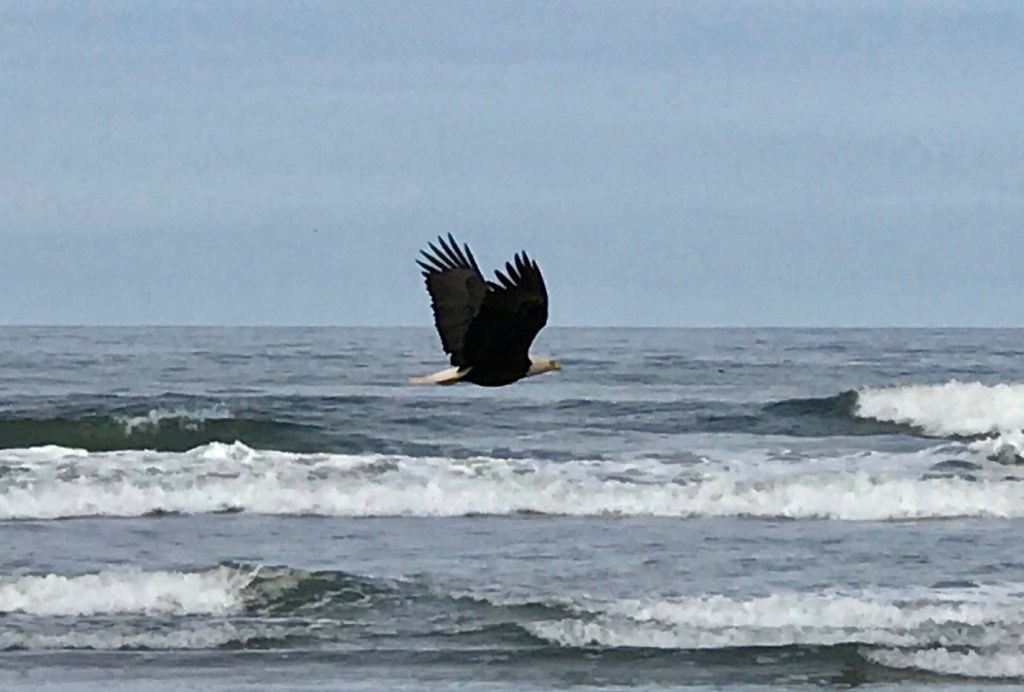
Juvenile Bald Eagle

Mature Bald Eagle calling

Adult non-breeding Sanderling
I remain in absolute awe of nature on this lovely little planet Earth. Please do your part to protect and defend her!
“Velella velella – this hydroid polyp remains afloat on the suface of the Pacific Ocean for most of its life. It never touches or even comes close to the ocean bottom, and the only stage in its life when it is completely submerged under water is the larval stage. The Velella velella begins its life in the middle of the Pacific Ocean, is brought by the wind to the shores, and is usually cast up on a beach where it dies and disentegrates. The Velella are most common on the high seas, in the warmer regions of the Southern and Northern Hemispheres. (Russell-Hunter 1979)(Ricketts, et al 1997)” Animal Diversity Web (ADW)
There isn’t nearly as much marsh in front of The Breakers at Long Beach, WA – USA this year as last, and what remains is shrinking to meadow daily.
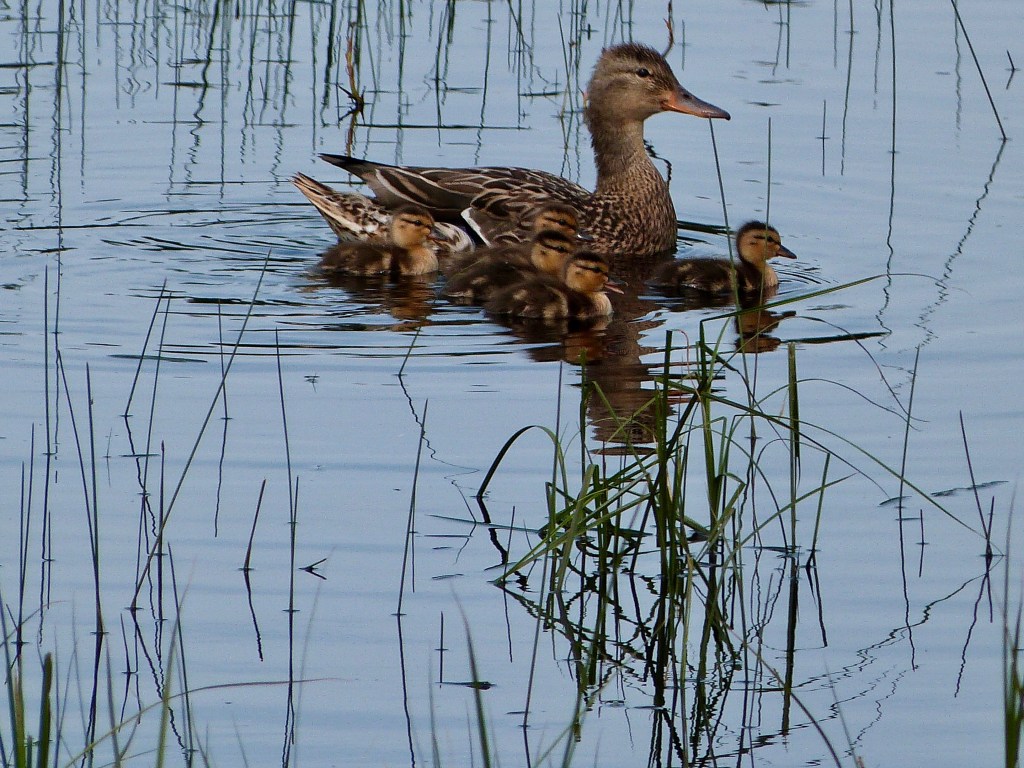
Still, Mallards are raising their chicks in what water there is!

Red-winged Blackbirds call from around the meadow. This one has established his territory, sounding his warning from the branches of this shrub every time I’m out.

Although common in marshy meadows, this is the first time I’ve photographed and identified a Savannah Sparrow.

Raspberry canes are in bloom and with the warm dry weather are attracting all sorts of pollinators.

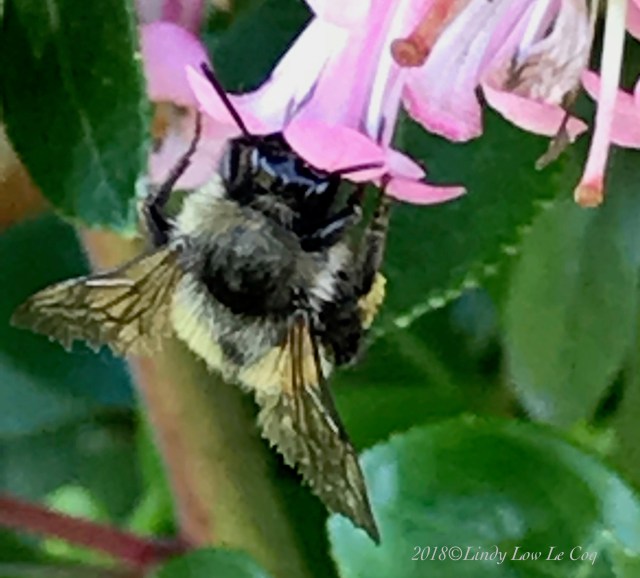
This Bombus caught my eye and stayed around long enough for me to get my iPhone and snap these shots.

Since I don’t know what variety of Bombus it is, I’ve now signed onto another citizen science project: Bumble Bee Watch!